“I hope this DVD still works, I’ve worn it out to death,” says my British Cinema lecturer, before our class screening of Wallace & Gromit: The Curse of the Were-Rabbit, which she insists is a masterpiece of gothic filmmaking. She finds no disagreement among the three or four film students who deigned to show up. Comedic, atmospheric and meticulously crafted, Curse of the Were-Rabbit, like every Wallace and Gromit film before or after, is an arduous labour of love, built from years of skilled craftsmanship that produced only a few seconds of usable footage each day.
Aardman—the independent studio behind Wallace & Gromit, Shaun the Sheep, Chicken Run and Morph—have developed an iconic and enduringly beloved style. Stop motion animation captures the detailed movements of beautifully formed plasticine models. At present there are two exhibitions celebrating 50 years of the animation studio. One in Aardman’s home city of Bristol, and another at the Victoria & Albert Museum in London, ending in September and November respectively.
On Christmas Day 2024, British audiences were treated to the television premiere of Wallace & Gromit: Vengeance Most Fowl, and the much-feared return of supervillain Feathers McGraw (who had primary school children wearing gloves over the bobbles of their winter hats when they returned from the Christmas holidays).
It’s a common critique of long running animations that their handling of contemporary topics and technologies feels contrived. Many Simpsons fans despair of Marge’s Facebook account, and Toy Story’s topical inclusion of a kid’s tablet is receiving mixed reviews. Vengeance Most Fowl, on the other hand, grapples with this evolving digital landscape more deftly.
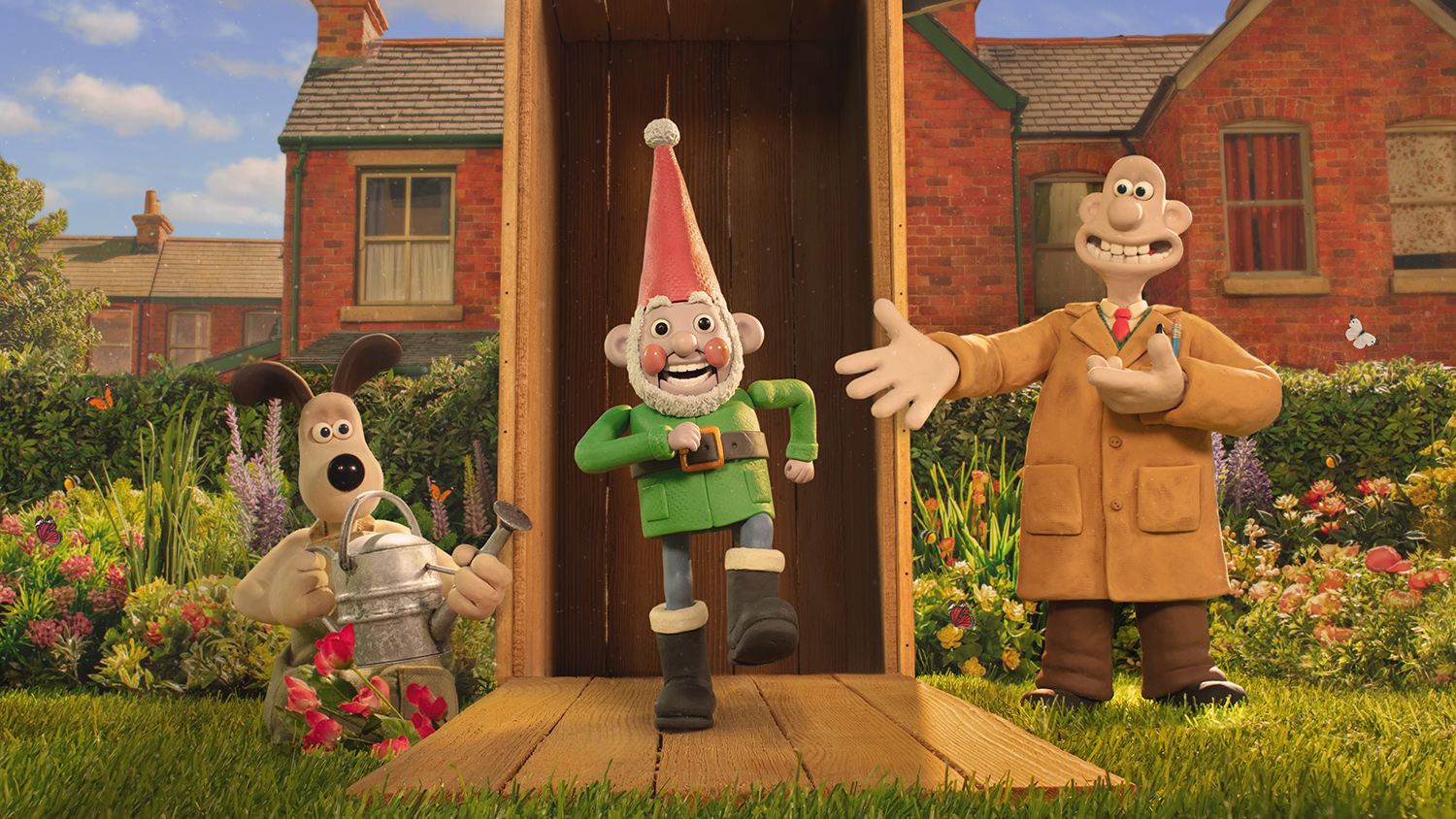
Wallace has always been an inventor. He longs for the newest, the most convenient solution. His innovation has charmed viewers since 1989, but when his latest, a ‘smart gnome’ named Norbot, is brought to 62 West Wallaby Street, Wigan, the long-suffering Gromit is left more exasperated than ever.
Well-intentioned but naive, Wallace has Norbot save Gromit from his ‘tedious gardening tasks’, and within moments, the smart gnome has transformed the space into something that while ‘neat and tidy’ is also rather…soulless? Once Wallace’s Norbots have spread across town, every garden looks the same and, well, Gromit was rather enjoying tending to the flower beds.
It shouldn’t ever be said, however, that Nick Park and the folks at Aardman are afraid of modern technology. Vengeance Most Fowl utilises a number of modern digital techniques not available in the age of A Grand Day Out, including small elements of CGI that don’t compromise that original charm.
Wallace’s inventions often are fantastic, but what he (unlike his creators) has forgotten, is that the process of innovation and problem solving is the fun part. Too much convenience and all that is lost—and so is his beagle best friend.
When conniving interference from Feathers McGraw turns the Norbots evil, all of Wallace’s inventions, including his reliable tea machine, are taken away for forensic examination. With a glimmer of hope in his plasticine eyes, Gromit dusts off the long-forgotten teapot. Wallace impatiently presses on the lid as though it were a button, and woefully declares ‘it’s not working!’, resigning himself to a day without tea. It seems his over-reliance on technology has caused deficits in his own logical thinking and reasoning. Sound familiar?
There is an increasing concern that as more and more of our lives are ruled by artificial intelligence, we will lose something of ourselves in sacrifice. It’s all in the aid of convenience, of saving time. An understandable motivation, but if we are to let AI write our stories, paint our pictures and choose presents for our mothers, what exactly are we saving time for?
As with all the best art, form reflects content. There are no shortcuts in stop motion; it is the most painstaking form in which to produce the moving image – but it is also the form that a child can learn in their bedroom, with toys and their dad’s old camera. It was the form that first enraptured teenagers Peter Lord and David Sproxton when they created their first animated sketch, ‘Aardman’, and Nick Park on the student project that became A Grand Day Out.