Conservation Matters in the North invites conservation professionals working in the North of England and beyond to share their recent projects or reflect on previous work. As our museum has recently undergone major development, it was the perfect opportunity to have over 100 conservation colleagues join us to discuss this year’s theme: storage.
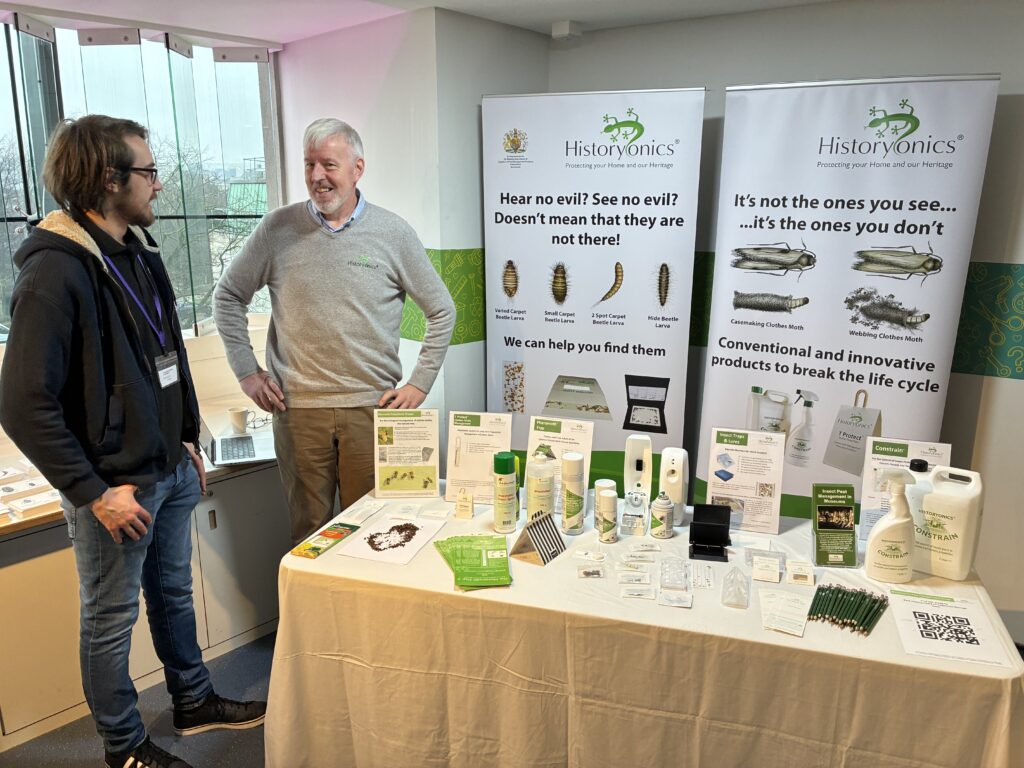
Hosted in Cubby Broccoli cinema, the conference began with words from Historyonics, who discussed their pest traps, including a newly developed wasp trap. Later in the day demonstrations were run, and interesting conversations took place about the new legislation regarding pest traps.
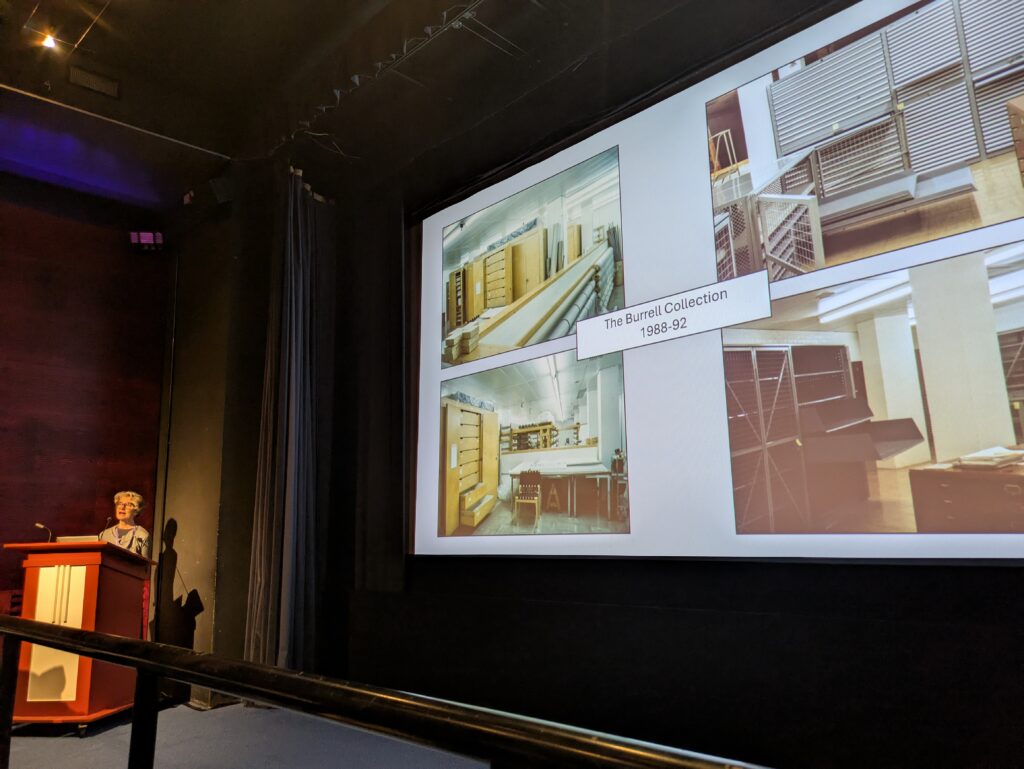
The first talk was given by Ann French, who reflected on her work safeguarding textile collections worldwide after hearing (and questioning) the phrase “conservators don’t do storage”. Ann began her career in Interventive Conservation, and work on an 18th century robe inspired her to think about how storage can undermine the work conservators do. This inspired her to work on improving the storage facilities of museums while maintaining accessibility to the collection. Ann explained how successful storage is appropriate to the context as different objects may need different storage solutions.
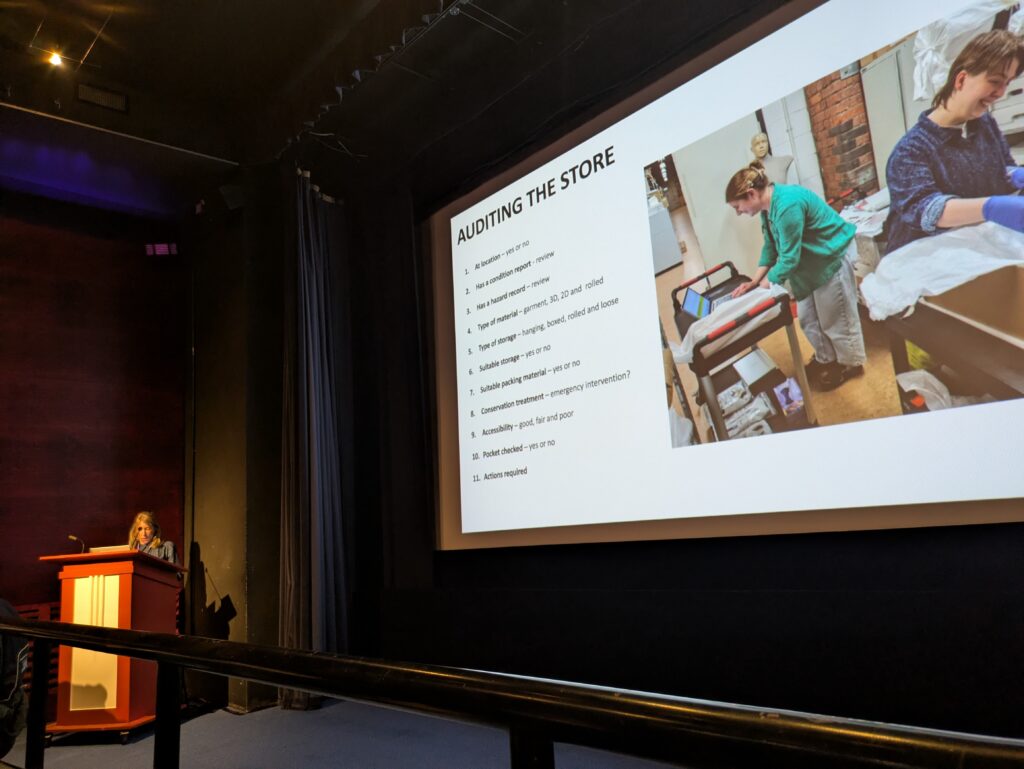
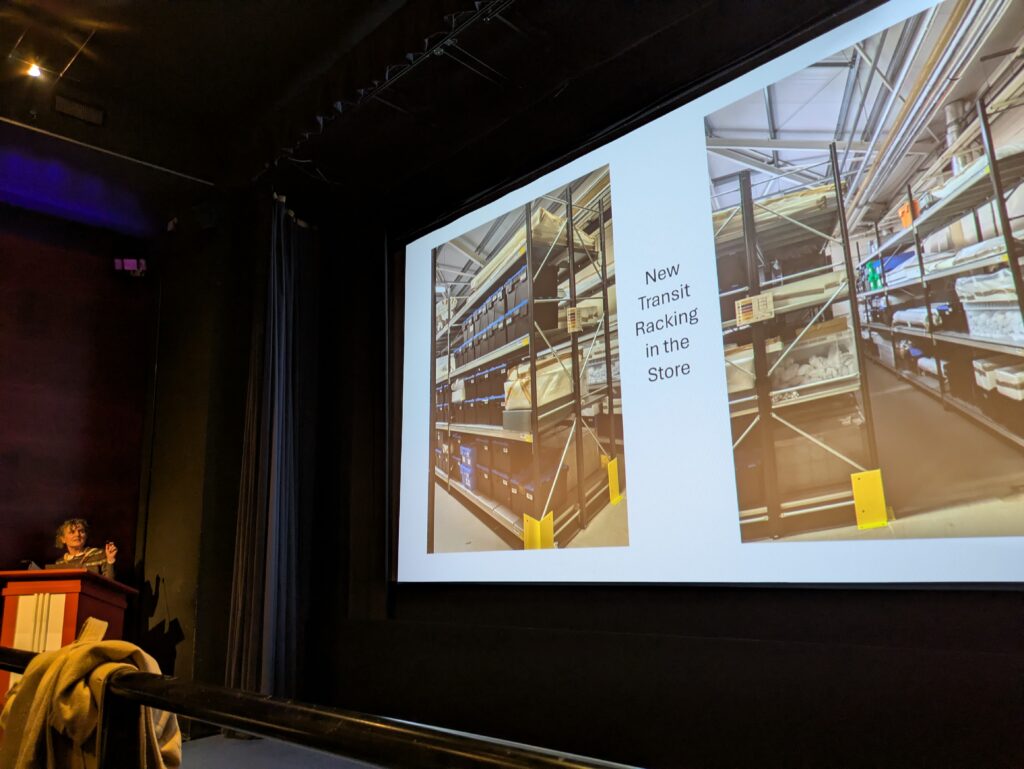
Kathryn Kreczak, Conservator at the Science and Industry Museum, undertook a project to improve access and care within the museum’s textile store. As part of this project, Kathryn and the team conducted a detailed audit of over 650 varied textile objects and identified issues such as overcrowding, poor accessibility and unsuitable packing. Through detailed auditing, reorganising storage, relocating non-textile objects, introducing new racking and upgrading packing materials, the team significantly improved visibility, handling and preventive practices. The project also uncovered unaccounted for objects and created clearer methodology for future improvements. This project highlighted how practical changes can transform the long-term care of collections.
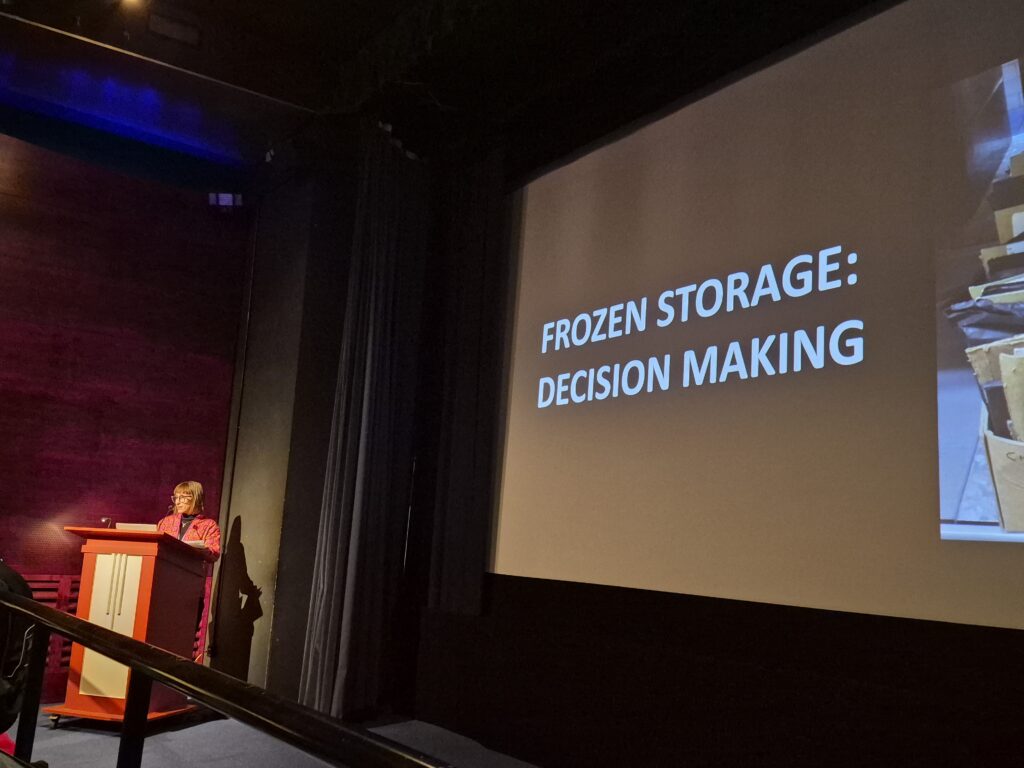
Next, Vanessa Torres, Conservator here at the museum, explored the need for and implementation of frozen storage for the museum’s collection of cellulose nitrate and cellulose acetate film, both of which can deteriorate under normal storage conditions. Faced with the potential loss of these valuable collections, and with the influx of more from the decant of Blythe House, Vanessa set about researching frozen storage and testing a method which would safely house the film collection on site. Vanessa tested dummy boxes to determine the correct amount of packaging and protection needed for the collection. Thanks to this work, we estimate that the film-based collections are safeguarded for over 5,000 years.
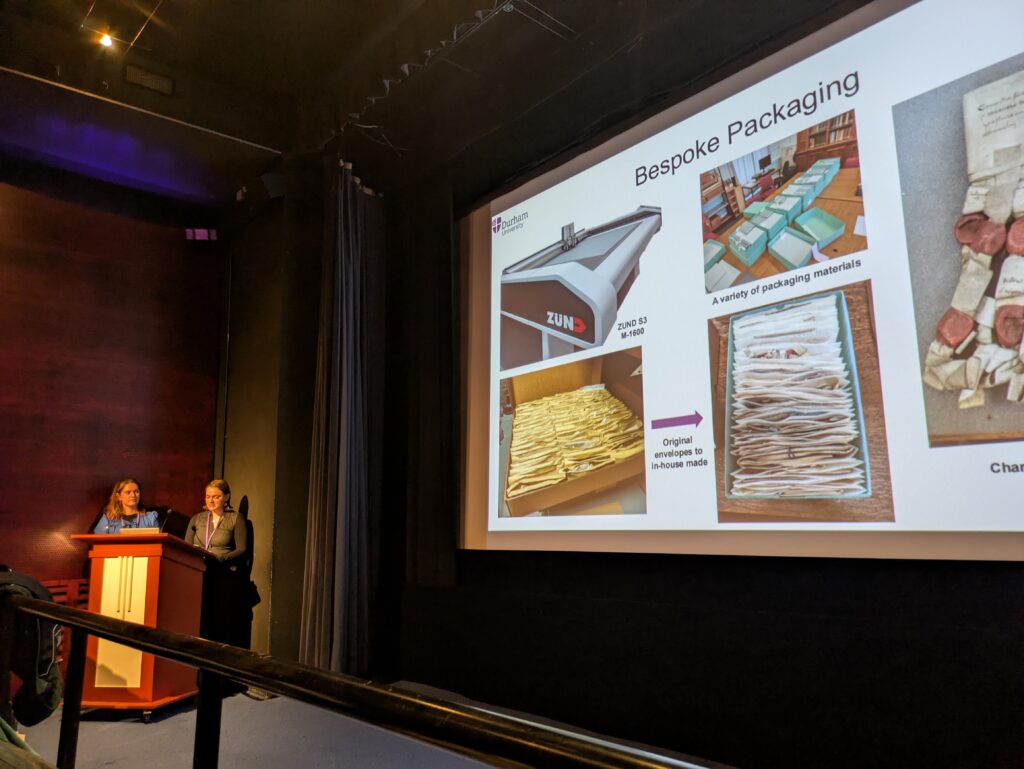
Joanne Fulton and Isabelle Morse continued with an insight into the planning and preparation it took to relocate the archive at Durham Cathedral. The team had to consider and plan for several difficulties along the way; not least the unpredictable English weather, and the cobblestones which will be familiar to visitors to Durham. Excessive vibration during transit had to be accounted for, and Joanne and Isabelle were able to use their respective expertise to create novel horizontal spring boxes on which to mount archive boxes, to absorb this movement. This was tested during fun experimentation with vibration monitors and rolling trollies across bumpy floors and doorways.
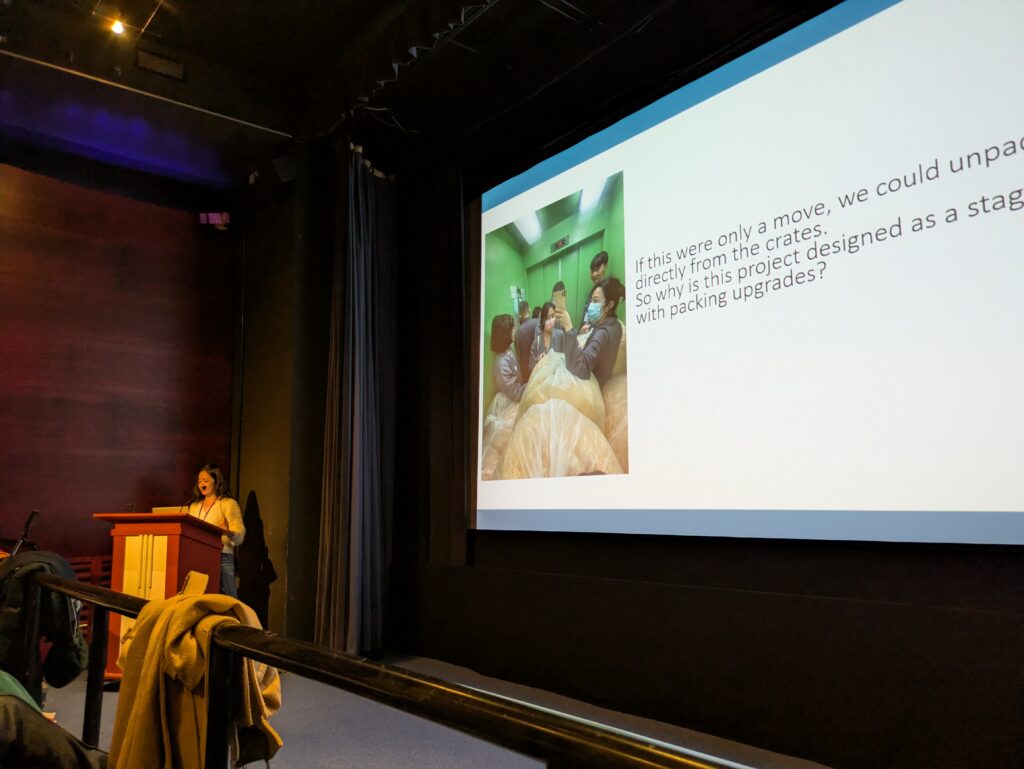
Yu-Hsin Chang gave us a fascinating insight into the challenges of reorganising the ceramics collection at National Palace Museum, Taipei—a collection of over 25,000 objects, stored in 1,531 cast iron crates. Due to emergency relocation, previous storage had focused on security rather than long-term preservation, and this project gave the opportunity for unsuitable packing materials (such as straw) to be replaced with conservation-grade packing. This was clearly a monumental feat, with very satisfying before and after images—especially considering the collection also has to be protected against natural disasters such as earthquakes!
The final talk of the day was given by Julie McBain from National Museums Liverpool to discuss the work that goes into decanting large objects from museum galleries. The talk focused mostly on the Maritime Museum which houses a wide variety of large objects such as ship models, torpedoes and figureheads. The decision was made to keep them in place and simply build protective hoarding around the objects. It was important to ensure access to the objects was possible and emergency kits were placed in every hoarding in case they were needed.
Posters review
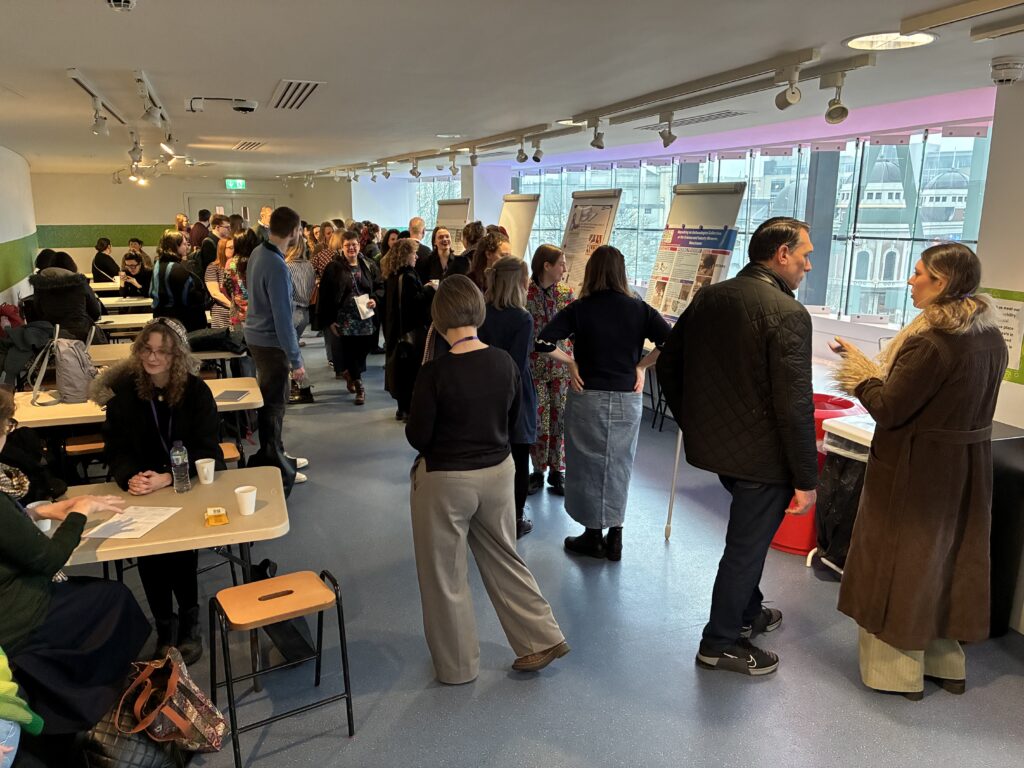
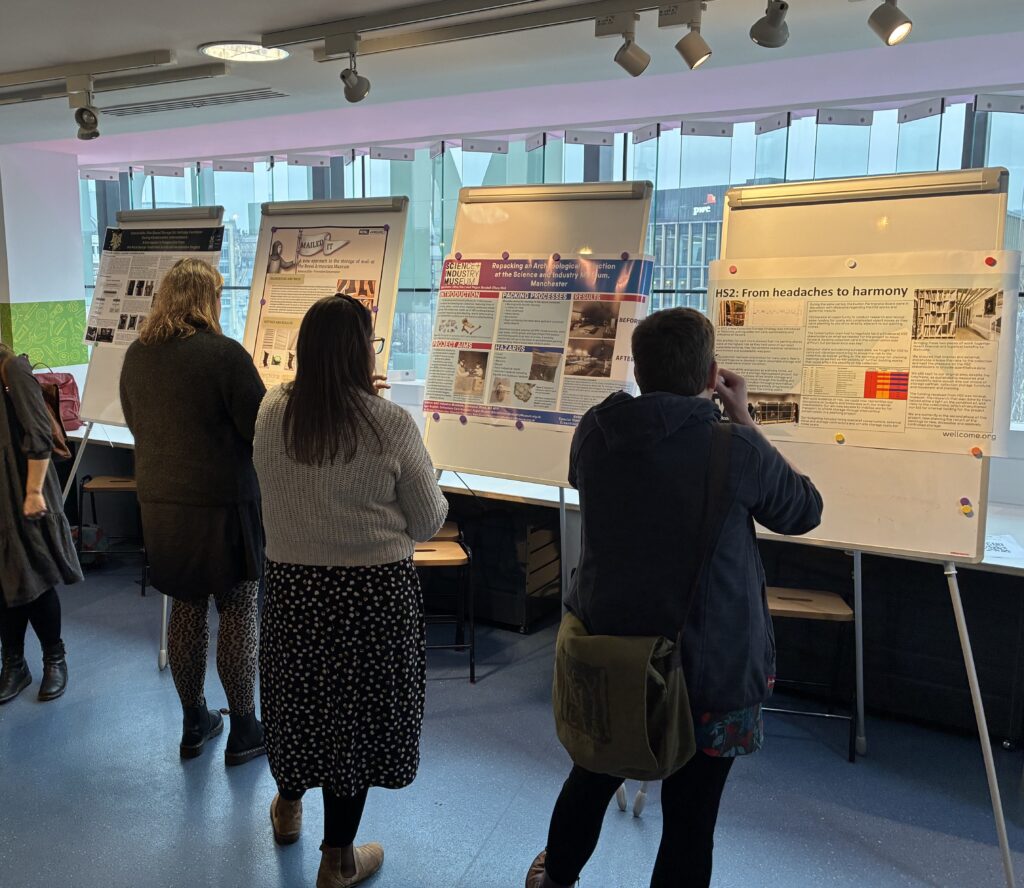
This year’s Conservation in the North conference marked the first time posters were included, and they proved to be an excellent addition. They not only initiated conversations with the presenters during lunch but also complemented the ‘posters questions and discussions’ segment of the event, which encouraged poster contributors to speak in greater depth about their projects.
Cesar Cerejo’s poster presented the development of risk-based, object-led storage solutions created for the Manchester Town Hall Furniture Restoration Project. It showcased professional experience from a major redevelopment project, offering insights from his perspective as a contractor. Combining data, planning and examples, it presented a valuable look at how thoughtful storage strategies can protect furniture throughout interventive conservation work without compromising an environmentally sustainable practice.
Rebecca Ellis’ ‘Mailed It’ poster presented a new method for storing mail armour at the Royal Armouries Museum. It clearly outlined the challenges of preserving complex, flexible objects and demonstrated how testing and custom supports led to improved long-term storage. Strong visual and practical insights made this poster a valuable look at conservation problem-solving in action.
Sarah Bird’s ‘HS2: From headaches to harmony’ poster showed how the HS2 development unexpectedly supported major improvements to Wellcome’s collections storage. By combining data, risk assessment approaches and effective communication with stakeholders, the team used the disruption to upgrade storage spaces and enhance long term sustainability for nearly 1,500 paintings. It demonstrated how external challenges can enhance improvements in collections care.
Sian Blake and Pagan Boydell’s ‘Repacking an Archaeological Collection’ poster showcased how the Science and Industry Museum improved the care of its archaeological collection through a major repacking project. The team upgraded packing, addressed hazards such as lead and mould, and improved documentation, safe handling and storage methodology. The poster showed how systematic planning can significantly enhance long-term preservation of the collection.
With thanks to the North West Conservators Group and the National Science and Media Museum for hosting—we’re already looking forward to the next Conservation Matters in the North!
Authors (National Science and Media Museum):
Vanessa Torres, Conservator
Emma Callaghan, Senior Preventive Conservator
Ben Robinson, Collections Care Assistant