Hello, my name is Emma and I have recently joined the National Science and Media Museum as Senior Preventive Conservator in the Conservation and Collections Care team.
My background in conservation has focused on the care of historic ships and their associated collections, and so the types of objects found in the collection at the National Science and Media Museum are very different. However, preventive conservation is an aspect of conservation which can be adapted and transferred whether you’re looking after a photograph, figurehead, video game or a ship!
Preventive conservation means exactly what you might think – the ultimate aim is to prevent any deterioration, or at least slow down the processes which might cause damage. Preventive conservation is the work which goes into looking after objects and collections without significantly intervening in the objects themselves.
Monitoring the conditions in which objects are kept, including their surrounding environment, light levels, display, and storage methods are just some of the tasks of a preventive conservator. But it’s also about making sure the people interacting with our objects are safe from any hazards, and so our policies, procedures and training need to be as robust as possible. Our objects also need a programme of inspection and monitoring, which includes a good clean from time to time!
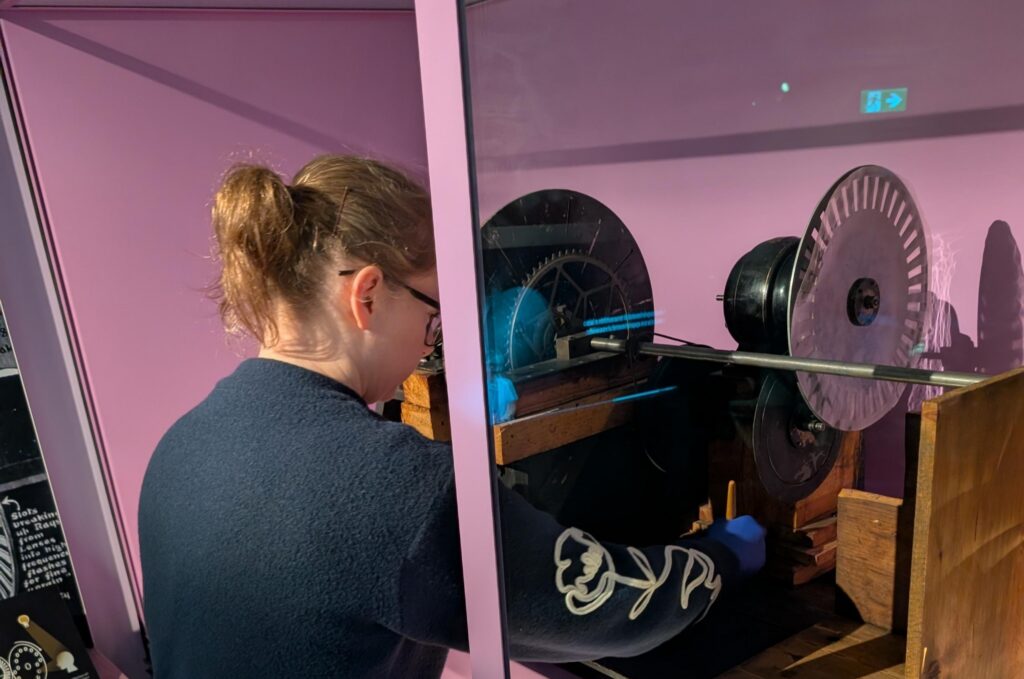
During my first two weeks I worked with Ben (you can read more about his start as Collections Care Assistant here) to check objects which are undergoing storage and condition reviews. One of these objects was the Magnavox Odyssey video game. Released in the early 1970s, this was the first commercial video game console generally available and came with screen overlays which would be used to provide visuals to the three dots and one line the console was able to produce.
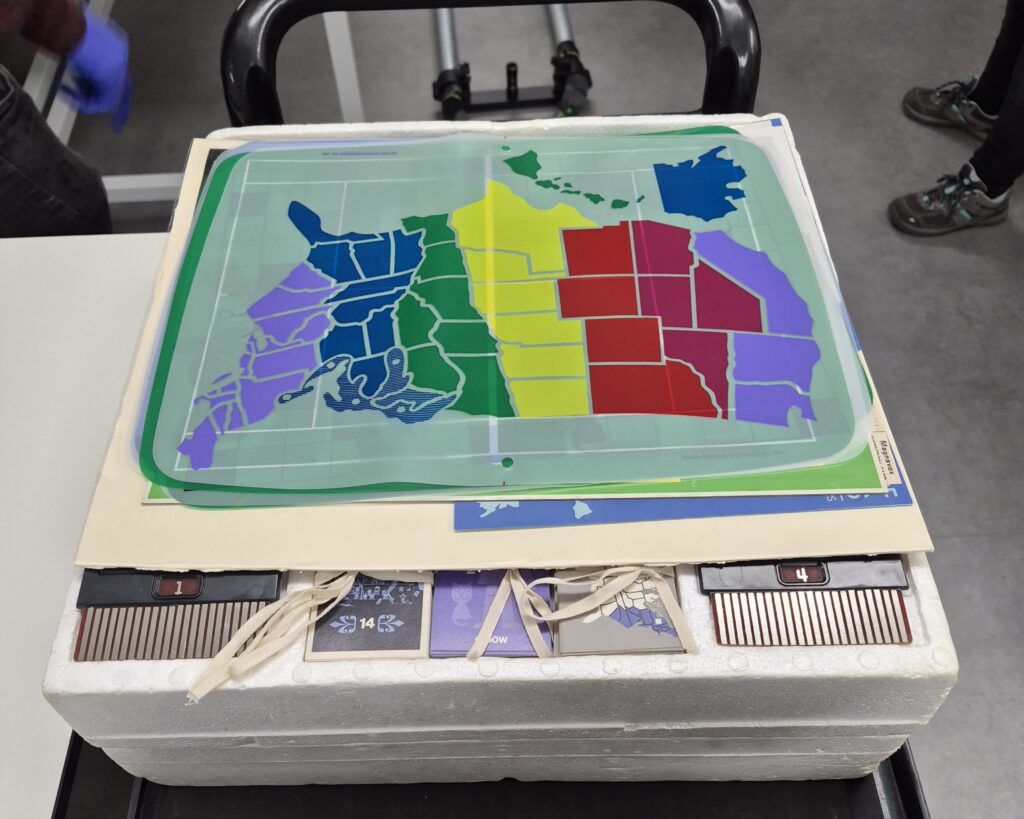
The Odyssey box was stored upright, meaning that all of the pieces and accessories were fixed in place – the inside was a bit of a mess upon first opening. Every overlay, piece and card was condition checked, recorded, and packed more appropriately.
During my first month there have been a lot of spaces and objects to try to become familiar with, and it’s been great to get stuck in with fabulous collections, conservation and curatorial teams. A lot goes in to caring for collections within museums, and I’m looking forward to playing my part at the National Science and Media Museum.