Light is fundamental to making and viewing photographs and other images, but it’s also one of the main causes of their decay. Constant exposure to light can cause irreversible damage to photographs, drawings, image dyes and other materials. Over time, objects can fade, yellow, shift in colour, become weak and brittle, or in some cases completely lose their image. Preventing this kind of irreparable damage when light‑sensitive objects go on display is a key part of a conservator’s role.
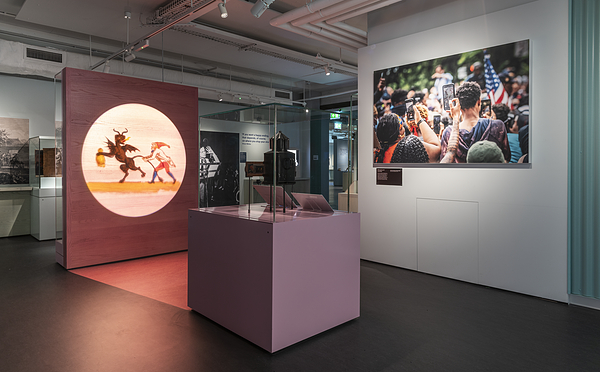
While all types of light can be damaging, the level of risk depends on several factors: the type of lighting used, the length of exposure and the presence of UV. In museums and galleries, this means prioritising LED lighting without UV and keeping objects away from direct sunlight.
During the planning stages of the Sound and Vision galleries, our curators focused on selecting objects that told exciting and engaging stories. At the same time, conservators carefully assessed whether these objects could safely withstand being on display. One of the interactive solutions we explored was the use of lightboxes to enhance the visibility of magic lantern slides, while limiting their exposure to light by using a time‑limited push‑button system.
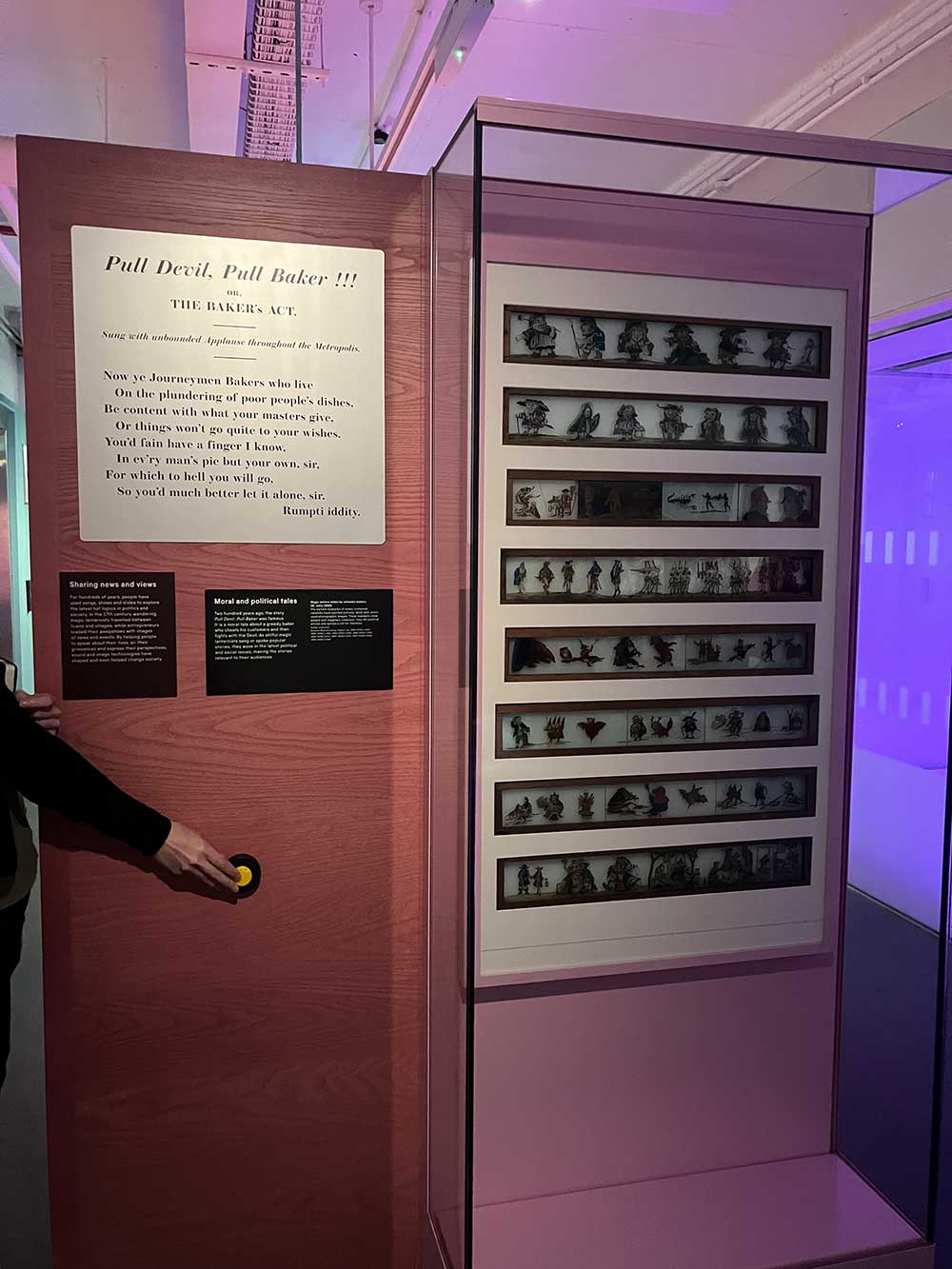
Back in September 2023, I explored a large collection of magic lantern slides that had recently been acquired by the museum. Magic lantern slides are images sandwiched between two layers of glass, designed to be projected using a magic lantern, an early type of projector. Together, slide and lantern brought stories to life and were a popular form of entertainment from the 17th to the mid‑20th century.
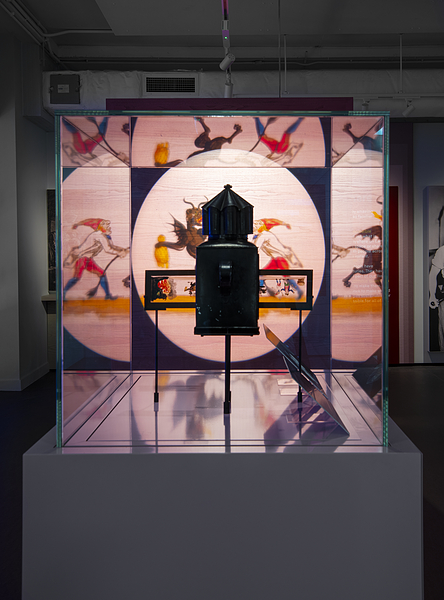
Today, we are used to a wide variety of immersive and fast‑paced entertainment, but magic lantern slides remain fascinating objects. They act as time capsules of past technologies, storytelling methods and society. In the Sound and Vision galleries, they help bring stories to life through early, state‑of‑the‑art animation techniques, illustrating well‑known tales alongside topical issues of their time—such as these hand‑painted images on glass showing people and imaginary, fantastical beasts.
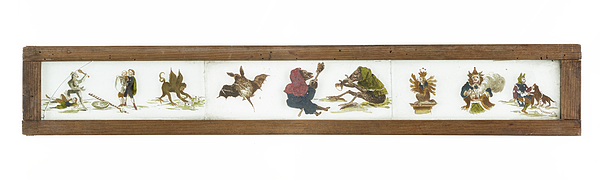
Once conservation cleaning, condition reporting and digitisation were complete, the slides were ready to be mounted and framed.
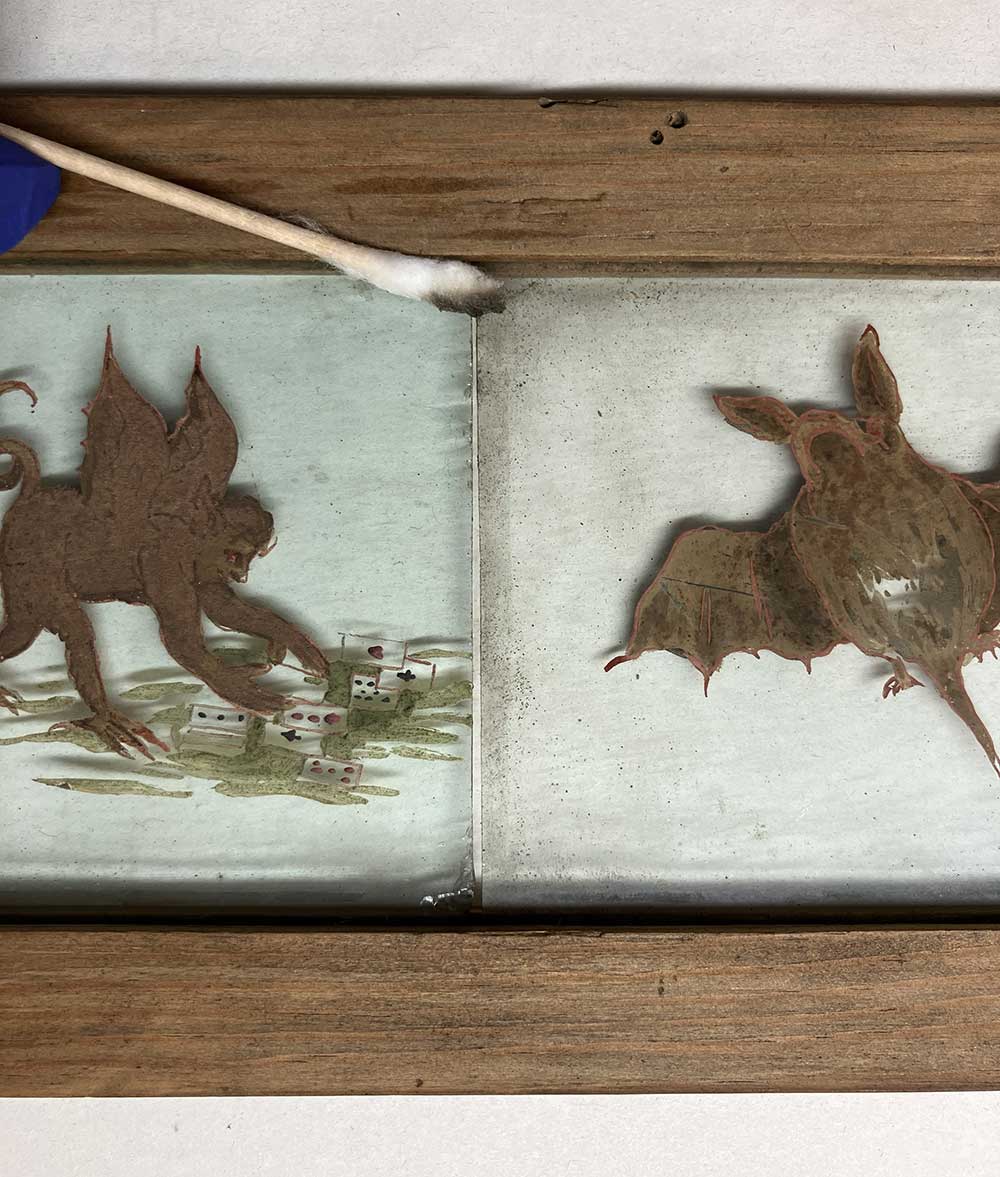
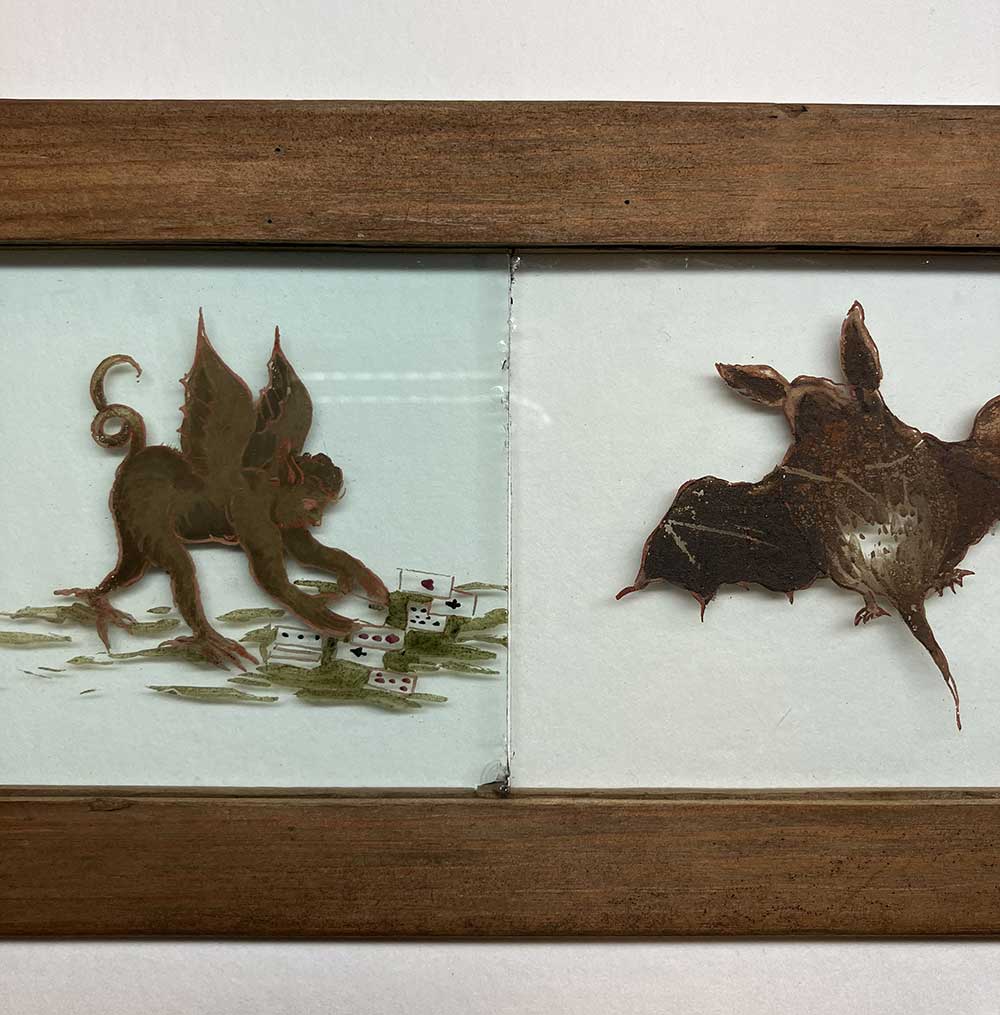
I mounted eight large magic lantern slides together between conservation‑grade mount board and acrylic sheets to create a rigid package, which was then slotted into a frame.
To enhance viewing, I added a slim, UV‑free LED lightbox sheet behind the frame, paired with a push button on a 10‑second timer. This limits the amount of time the objects are subjected to additional light. When the lightbox is switched off, visitors can enjoy the slides under the gallery’s ambient lighting, which reveals material details such as areas of loss or breakage. When the lightbox is switched on, the full content of the image is revealed, allowing visitors to appreciate the slides in all their fantastical and quirky glory.
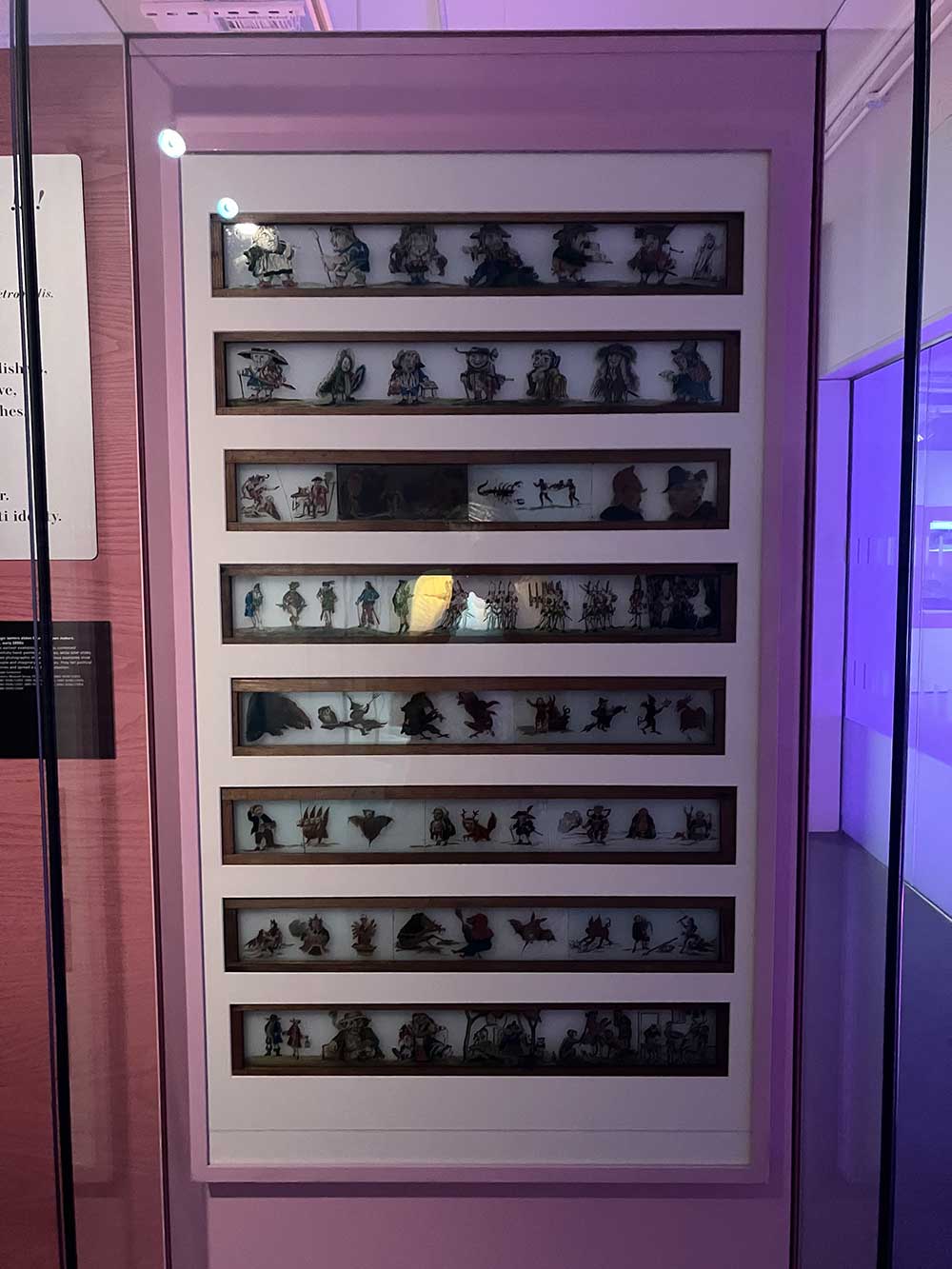
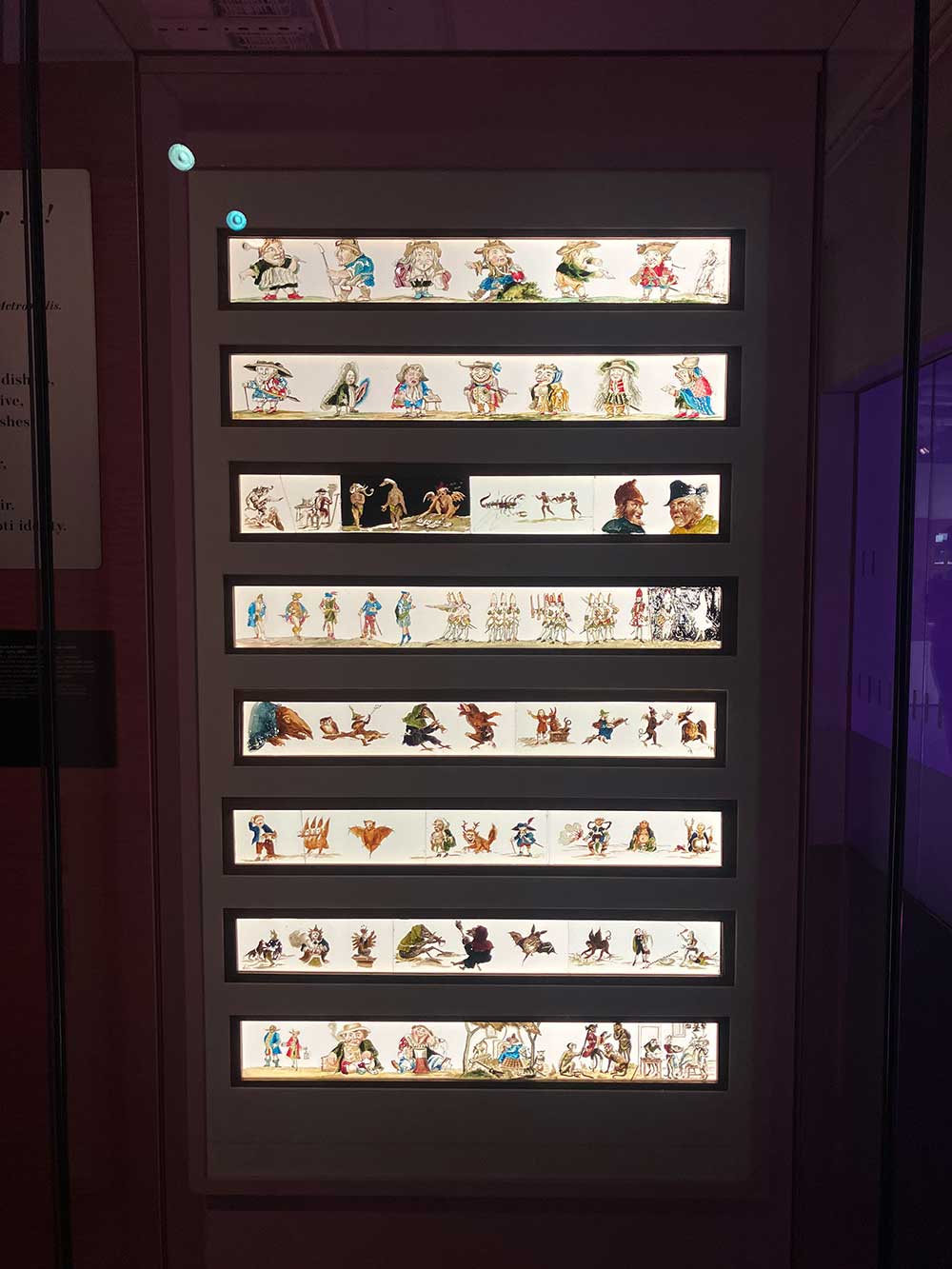
By carefully balancing conservation needs with thoughtful display design, we can protect these fragile objects while still allowing visitors to experience their magic.