The Eurovision Song Contest traces its beginnings to the aftermath of the Second World War and a wish among participating nations to build a transnational broadcast network, ushering in a new, more optimistic era of collaboration across borders. From the outset, the very latest technologies and innovations found a testbed at scale in what has become the world’s largest live music broadcast—with ESC 2025 reaching over 166 million viewers worldwide. Here’s a selection of the many breakthroughs that Eurovision has played a part in popularising.
Digital Virtual Environments
The 1996 Eurovision ‘Blue Room’ was an early, large-scale live broadcast experiment with virtual studio and chroma-key technology—the same concept that evolved into the virtual production and digital compositing systems used in modern Marvel superhero films, from The Avengers to Guardians of the Galaxy.
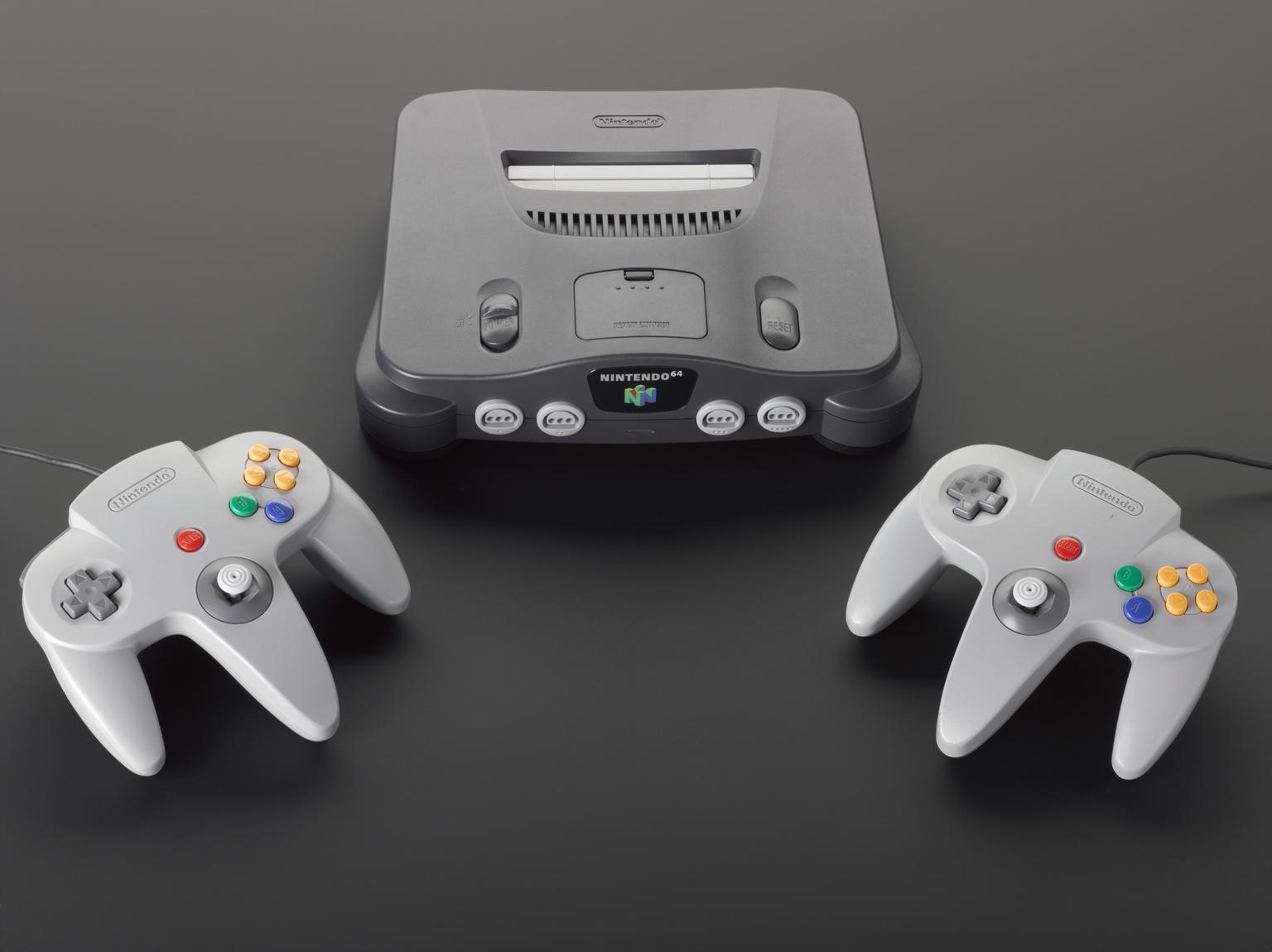
Although the BBC had been using colour separation overlay since 1985 to replace magnetic weather maps, it was the 1996 Eurovision Song Contest in Oslo that took a gamble when host Morten Harket of A-ha reported live from the green room, while fellow host Ingvild Bryn introduced the Blue Room. This included a comedy moment in which Ingvild ducked to apparently avoid being squashed by a simulated falling wall. The Onyx computers used to process the effects were originally created to build computer games for the Nintendo 64 console.
This 1970 Blue Peter clip with presenter John Noakes on the new application of colour separation overlay is hilarious, using his head as a basketball.
Digital Graphics
The revolutionary Quantel Paintbox, the first dedicated computer graphics workstation suited to broadcast television, was first invented in the UK and later became commonly associated with the pop-art, rapid-edit style of MTV Music Television. It was used to generate graphics for the 1982 Eurovision Song Contest held in Harrogate, only 20 miles from the National Science and Media Museum. Such was the expense of the Quantel Paintbox when first available that venue staff recall it was guarded by its own security team in a standalone cabin.
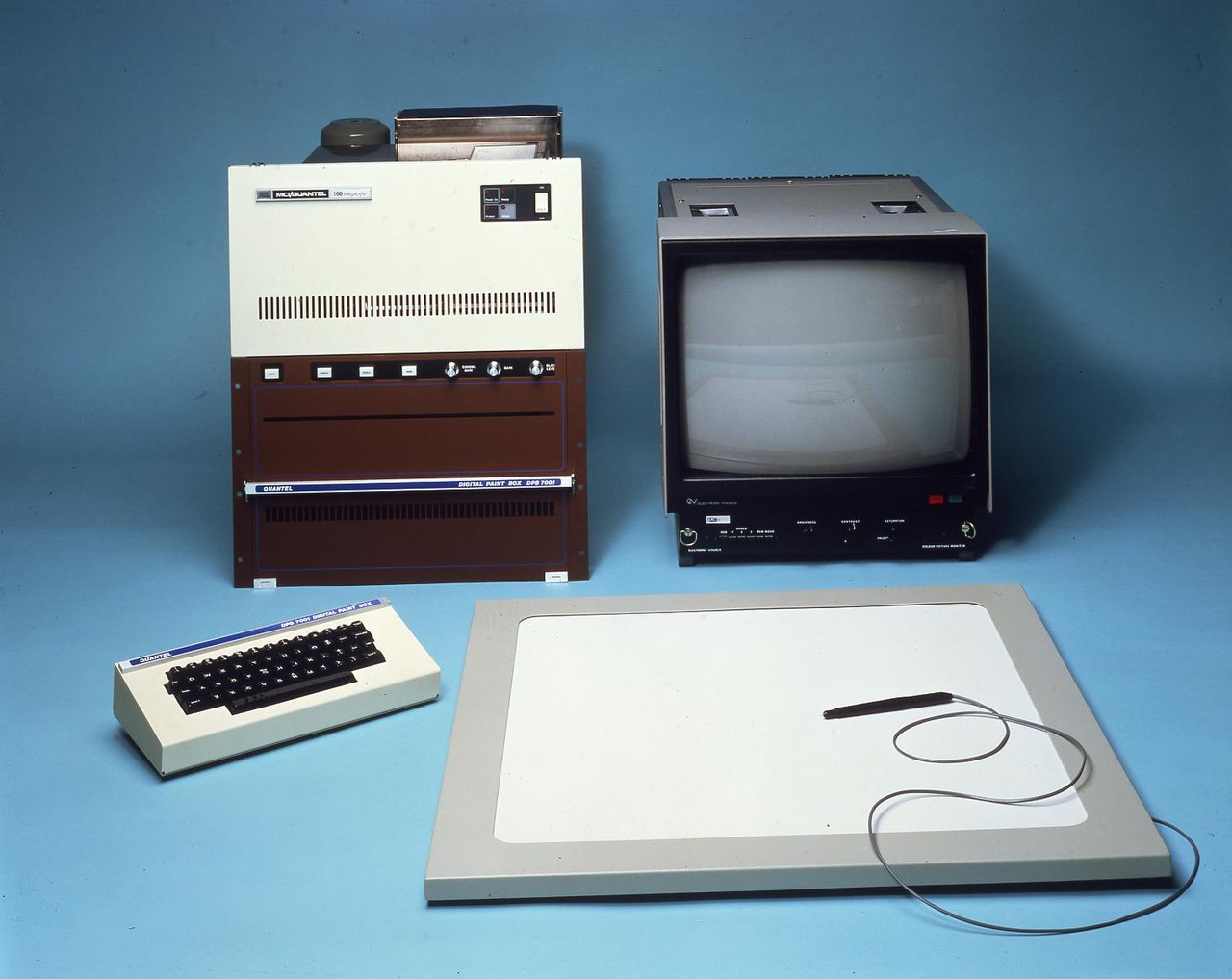
The Paintbox was used to create such iconic music videos as Dire Strait’s ‘Money for Nothing’ and Queen’s ‘It’s a Kind of Magic’, and was also adopted by Bradford-born artist David Hockney to create his first digital artworks, although he now uses an iPad.
Aerial Camera Systems
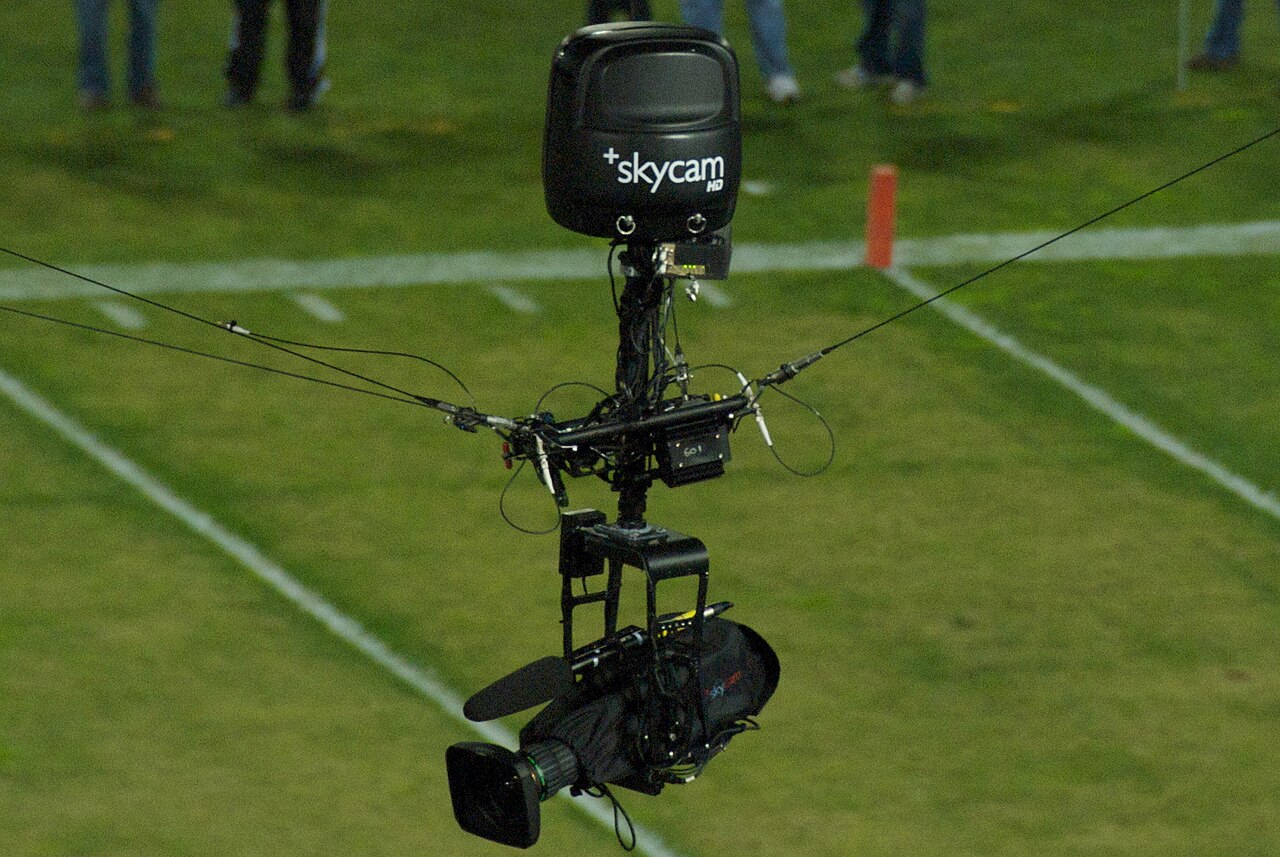
Eurovision helped normalise and popularise aerial cable camera systems for live global broadcasts, from Spidercam, Cablecam and Skycam, evolving from the camera crane and fixed rail methods. 2011 is widely considered the first year cable-suspended aerial cameras were heavily and visibly integrated into Eurovision’s visual language, which took place at the Merkur Spiel-Arena (formerly the Esprit Arena,) in Düsseldorf, Germany. The venue had a much larger standing audience capacity than was usual for the show, in the region of 35,000, so was especially suited to this approach.
The same core technology has now been widely adopted as standard throughout major sporting events, from FIFA and UEFA football broadcasts, to the NFL Super Bowl and the Olympic Games.
Wireless Microphones
It’s generally accepted these days for a live concert or arena tour that the performers are able to dance and even run around freely, without being limited to a fixed position by clutching a standing, cabled microphone. The Eurovision Song Contest has played a major part in evolving wireless mics for performers and continues to provide a global platform by which to test the latest stage-technology.
The acclaimed British singer-songwriter Kate Bush is credited with popularising a prototype headset mic for her Tour of Life in 1979, which is said to have been partly constructed from a bent coat hanger!
The Shure Axient AD2 Handheld Wireless Microphone you see on display in Setting the Stage: 70 Years of the Eurovision Song Contest is among the most popular current wireless models, with pop royalty Taylor Swift using customised, coloured and even crystal-embellished versions of Shure microphones for her Eras Tour to match her many outfit changes.
5G and Next-Generation Broadcasting
The Eurovision Song Contest has helped drive the shift from traditional satellite television to internet-based live broadcasting. For the Eurovision Song Contest 2021, staged during the pandemic, every country was required to record a full backup performance. This was not a music video, but a run-through performed exactly as it would be on the night, with live vocals and no studio editing, should travel restrictions prevent an artist from appearing in person.
The system of distribution is called IP (Internet Protocol), which breaks video and sound into small packets of digital data so they can travel across fibre cables or wireless networks, much like information sent over the internet. 5G is the delivery method, allowing broadcast-quality video to be transmitted wirelessly without heavy cabling.
The very same networking foundations also power online multiplayer games such as Fortnite, Call of Duty and League of Legends, where millions of players exchange data in real time across the world, showing how the technology behind a global song contest is closely connected to the digital worlds of modern gaming.
Surprised? You should be. The Eurovision Song Contest is much more than light entertainment, regularly delivering a booster injection of technological ingenuity for the wider entertainment industry.