Last October, the exhibition was the headline of our October half term programme in The Broadway; this year we’re discussing the future of his fantastic exhibition, the hugely significant inventions featured within it, and thinking about why some scientists are household names and others aren’t.
If you prefer, you can listen to a recording of this interview here:
Hattie: We’re here in Pictureville bar, at the National Science and Media Museum. Chris, please can you introduce yourself?
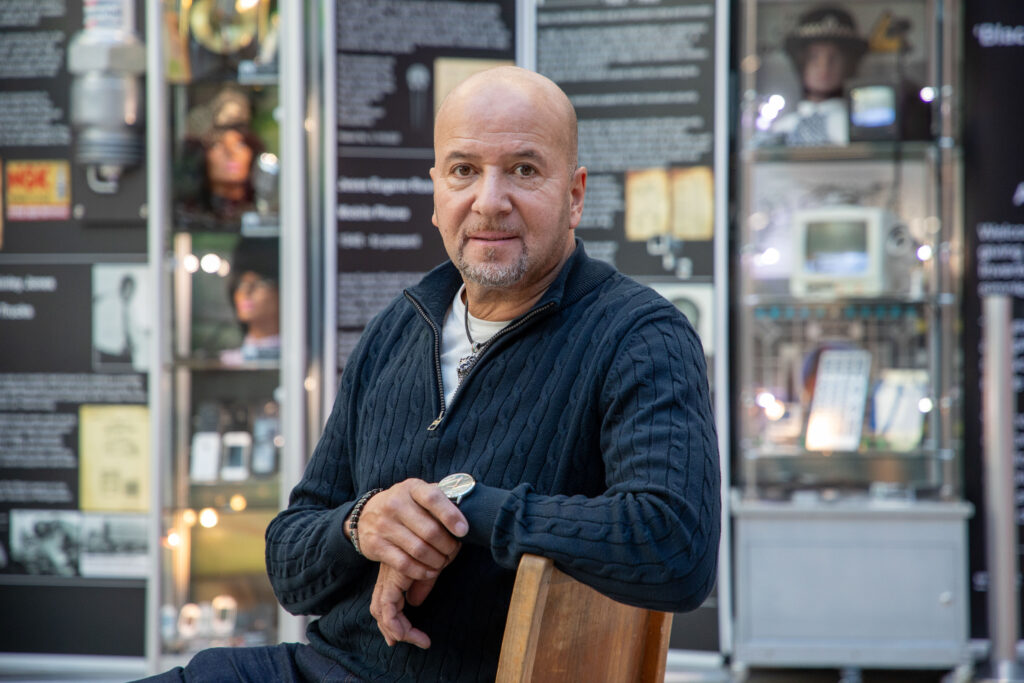
Chris: My name’s Chris Peltier. I’m the curator of The Real McCoy: Black Inventors exhibition that I put together for various reasons. Now I’ve accidentally become a creator, or curator, of this beast.
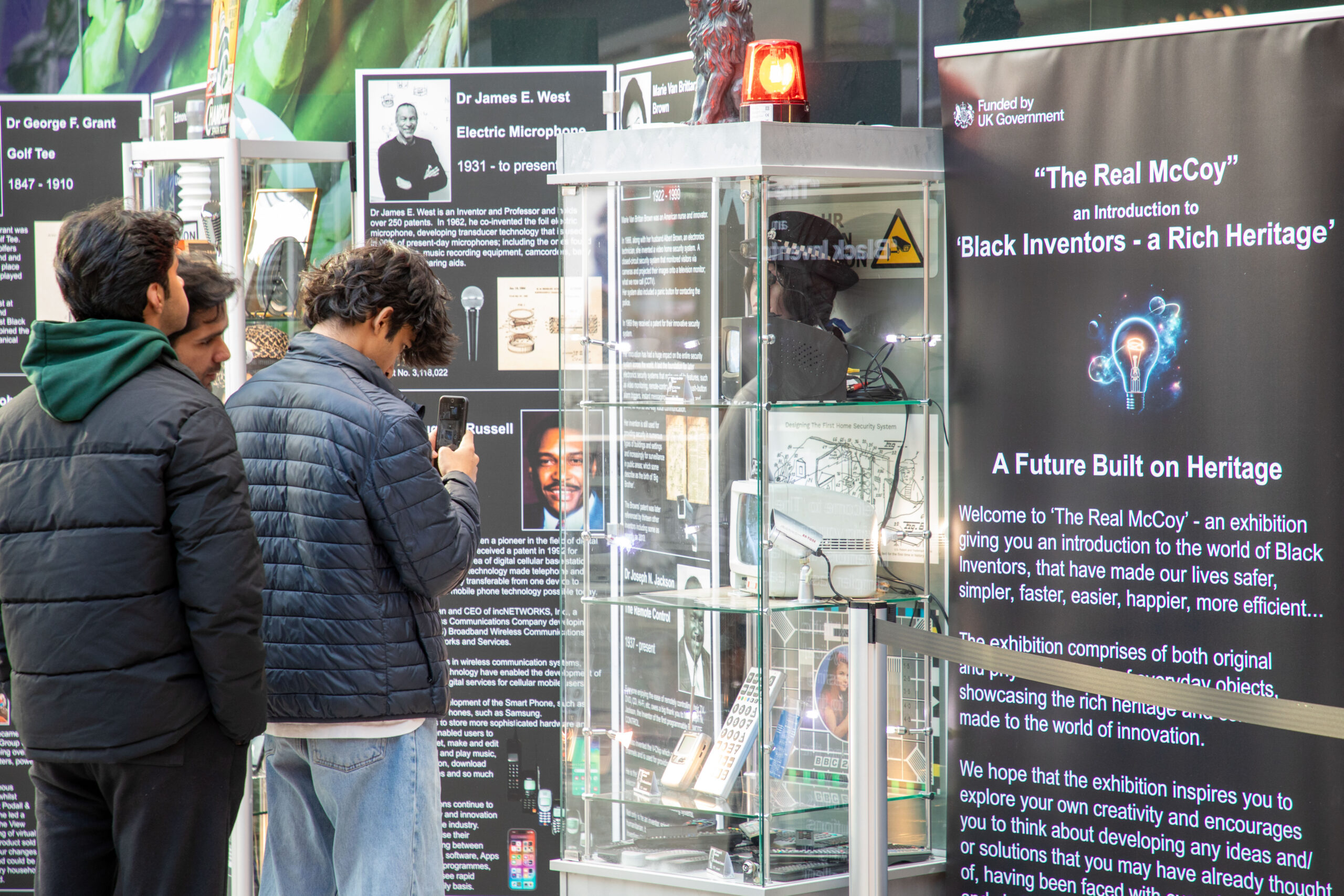
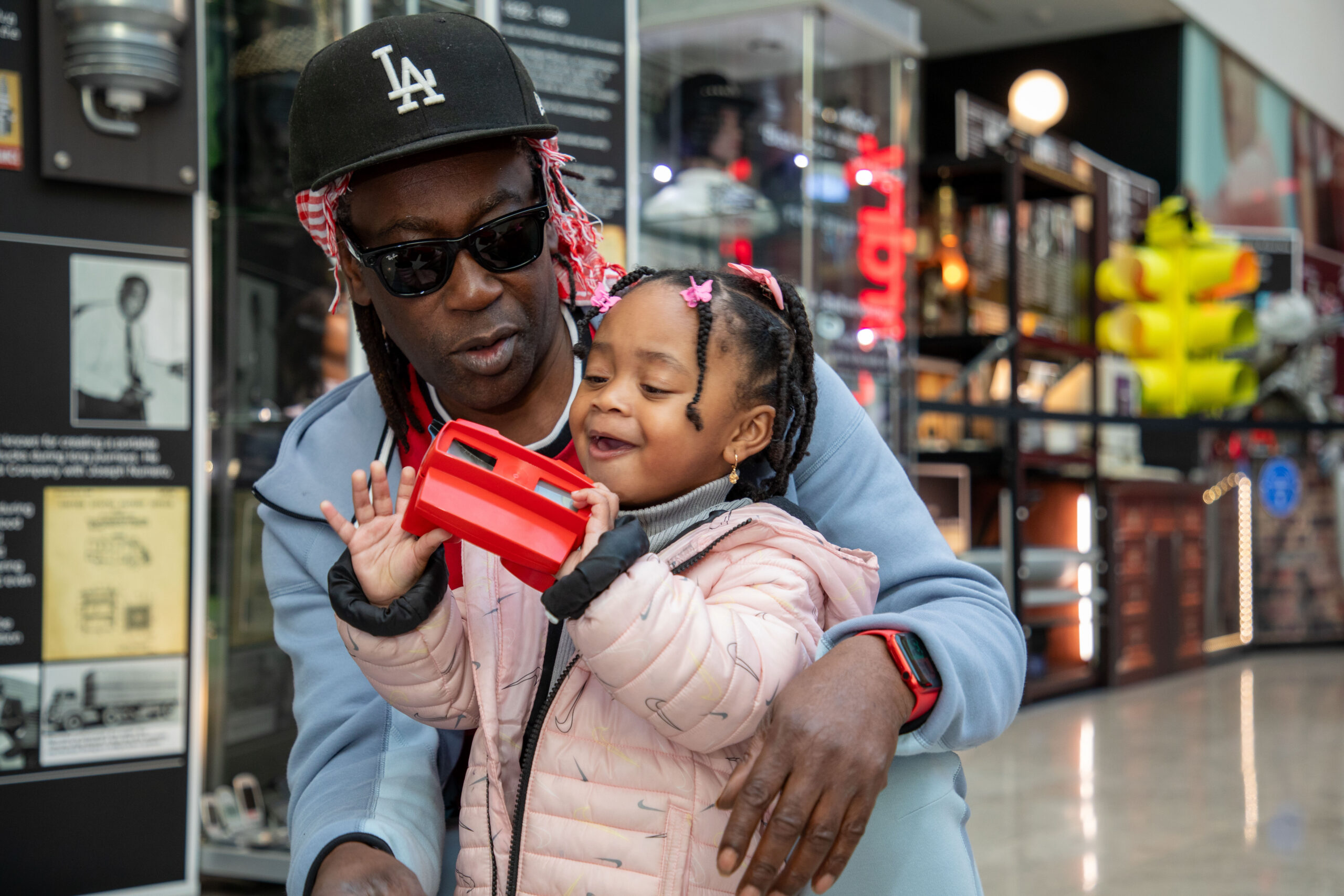
The Real McCoy: Black Inventors is an exhibition which tells stories through photographs, text, full-scale props and even interactive elements. It shines a light on many inventions by Black scientists which we now use in our daily lives without knowing the full story behind them.
Chris tells me that throughout his experience of further and higher education, his curriculum and the teaching lacked any representation of the brilliant Black inventors he knew existed throughout history.
Hattie: Can you tell us why you created The Real McCoy exhibition?
Chris: I kept stumbling across these great Black inventors and I’m thinking, ‘why are these not within the curriculum?’
I then come across a book which featured the ‘Greatest 100 Inventors’, and the only person of colour in there was Michael Jackson. For those people that don’t know, he created the anti-gravity boot for one of his videos. I thought, this is ridiculous.
Not only are they often withheld from the history books, if they do manage to get within the curriculum their contribution is often downplayed or appropriated by somebody else.
For example, Lewis Latimer who created the carbon in the filament of the incandescent light; he basically solved the problem of the light bulb for Thomas Edison. Some books describe him as a ‘gopher’ for Thomas Edison, whereas he was an engineer in his own right and he was actually a patent attorney, working with the likes of Alexander Graham Bell and other prolific inventors.
For me, it shouldn’t matter who has invented a particular invention or process, so long as the end user is benefiting from it. Whether it’s for health, education or exercise, as long as they’re benefiting, it shouldn’t matter.
But, the mere fact that a lot of these Black inventors have been withheld purposely from the history books, it means that it does matter. I just felt it incumbent on me and important to actually address that and tell their stories.
Hattie: What a hugely important reason to make an exhibition, and it’s so wide reaching. You’ve told those stories to so many people already in various places. I wondered if you could tell us about your favourite object or story in the exhibition?
Chris: They’re all brilliant, but one that stands out to me over and above the invention itself is Dr. Patricia Bath’s laserphaco.
She invented a piece of apparatus using laser technology to actually remove cataracts from the eye without surgery in terms of cutting or anything like that.
So that’s brilliant – but the important thing for me is that Dr Patricia Bath argued in America that eyesight is a basic human right, which led her to set up the American Institute for the Prevention of Blindness in 1976, which gave free access to people to have eyesight treatment. They now give that treatment around the world a bit like Médecins Sans Frontières.
One of her greatest claims is that she’s actually restored the eyesight of people that have been blind for 30 years. I just couldn’t contemplate losing that. Of all the senses, eyesight is one of the greatest – so to have that restored after 30 years, that’s just incredible. So that’s one that I think stands out, basically because of what it treats.
Hattie: Dr. Patricia Bath is such a significant scientist. She was recently featured in a science show at our museum for children, and I remember everyone struggling for a while with ‘ophthalmologist’, her doctor specialism. It’s a hard tongue twister, but the work she did was absolutely incredible.
So, other than about Dr. Patricia Bath, what can families, children or adults who visit the exhibition learn?
Chris: Really that everybody has a level of creativity and that creativity costs nothing.
When we were young, we were always exploring and being very, very creative. And sometimes when you get into the formal education system, that’s then suppressed because it’s like, ‘You’ve got to do it this way. This is the method that we’re teaching. This is the route that you’re going.’ Some creative people get frustrated in that environment. And to me, it’s about nurturing that creativity and the range of exhibits in The Real McCoy will show you that.
Hattie: That’s wonderful. And everyone deserves to be represented in that field of science, creativity and invention, which your exhibition really does well. I also love that it’s hands -on. It’s got historical figures and pop culture figures, as well as doctors, scientists and people who are really academic and scientifically focused.
Chris outlines a few of the main stories featured in the exhibition, including mathematician Gladys West’s pioneering work on early GPS and the ever-popular SuperSoaker, invented by engineer Lonnie Johnson. We both agreed these should be household names!
Hattie: Where would your favourite place be to exhibit The Real McCoy exhibition?
Chris: To be honest, I’d love to exhibit in the White House with Donald Trump. Donald Trump did a blog trying to sell how great America was, and started listing all these inventors. ‘We invented this, we invented that.’ Every single invention he named was by a Black person. He was trying to attribute it to the way he thinks America is. To be honest, I’d love to exhibit in the White House with Donald Trump seeing all these great Black inventors that he’d mentioned staring him back in his face.
Hattie: Wow, what a sight that would be – maybe one day! Well, he’s in the UK at the minute, isn’t he?
Chris: Exactly – he should come up and have a look and see who actually did invent certain things.
Hattie: Okay then, longer term, what is your vision for The Real McCoy?
Chris: Well, really, my long-term vision would be to have a permanent installation up north, where you could go in and see not only Black inventors, but a truthful timeline of what Black people have contributed to this world.
Because, to be honest, all too often, 95% of the images that you see on TV that are broadcast and pushed in your face, quite often there’s a false narrative.
I stumbled on a book called ‘Black Pioneers of Science and Invention’ and it really opened my eyes to the false narratives out there. The writer of that book, Lewis Harbour, he actually interviewed families of inventors; wives, husbands, sons, daughters, grandchildren, and got access to original archives, blueprints, etc. to tell their story.
Some of the stories have been watered down so much, or falsely reported. It’s sad. Although you can’t discredit any of the great inventors, such as Thomas Edison, many people don’t realise that even Thomas Edison was so wanting to build this empire of being the greatest. It’s very competitive sometimes being an inventor because you’ve got to be secretive and keep everything until you’ve patented it.
Granville Woods was a prolific Black inventor of the railway. Thomas Edison took him to court to say that he’d stolen his patent. Granville Woods just smiled, went to court, challenged this big prolific inventor and won three times.
I call the exhibition Black Inventors Exhibition – ‘A Rich Heritage’ as a play on words; it’s not just about the money that some of them made, it’s about the rich stories behind each inventor. Every inventor’s got a real story.
And if you’ve got a permanent setting for this exhibition, you can tell that story and show that narrative at the side of the invention. So yeah, I’d love to have a permanent exhibition where people even from London are coming up here to come and see it.
You can see The Real McCoy™ Black Inventors Exhibition – ‘A Rich Heritage’ on the following dates:
6–10 October: David Hockney building, Bradford College.
16 October: Flourish Café with ‘New Vision Bradford’, an organisation working with people with drug and alcohol addiction
23–27 October: Damart, Bingley
The National Science and Media Museum and Chris Peltier would like to thank Eddie at Caribbean Samples for editing the recording of this interview, and Enoch the 7th Prophet for their permission to use ‘Black Inventors’ and ‘Black Made That’ music in the edit.
Hi chris, fantastic exhibition, I need your support. Collaboration is our key, true coming together can benefit us all. The hard work which you have achieved showcase how shinning a light into the dark corners. Which are not acknowledged from black people’s contributions. Please make contact we need to come together, to make a positive change. Thanks in advance. The Ipswich Windrush Society micro museum is based in Ipswich town centre. Check us out on our Instagram.
Hi Max thank you for the acknowledgement and reaching out, it is much appreciated … I’ll contact you, but my contact number for the exhibition is 07723 020916
Well done Chris for your dedication passion and hard work, It speaks loudly.. without words been said, I wish you all the best and pray the beast helps to wake up the thousands if not millions, who have been ignorant to the truth, and may it go that bit further and help the youth and adults to understand what can be done once you put your mind to it, 🙏🏽❤️
Thanks Randolph, for your personal support and your professional business services from PRS PRINTERS, and the staff at THE DESIGN CENTRE …ALWAYS top notch!