Vanessa, conservator – Antoine Claudet daguerreotype
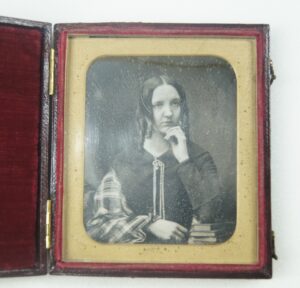
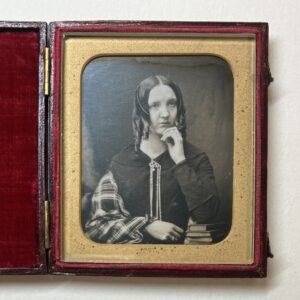
This daguerreotype of a woman made by Antoine Claudet studio was my favourite object to conserve in the Sound and Vision galleries. Claudet was an early adopter of the daguerreotype process: he developed a way to speed up this process, leading to shorter exposure times and making daguerreotypes more suitable to portraiture.
The mirror-like surface of a daguerreotype plate is very fragile to handling and surrounding environmental conditions. Consequently, they were placed behind glass, inside cases, frames and jewellery. However, overtime the glass used to protect the surface of our daguerreotype began to deteriorate, creating an opaque pitted pattern and stains that could drop on its surface. I used a small glass sucker to remove the glass and plate from the case, opened it, washed and dried the glass before putting it all back together again. I added a specialist sealed package to protect this daguerreotype for its future life on gallery. The most satisfying job!
Eleanor, Conservator – Maggie’s Mo-Cap suit
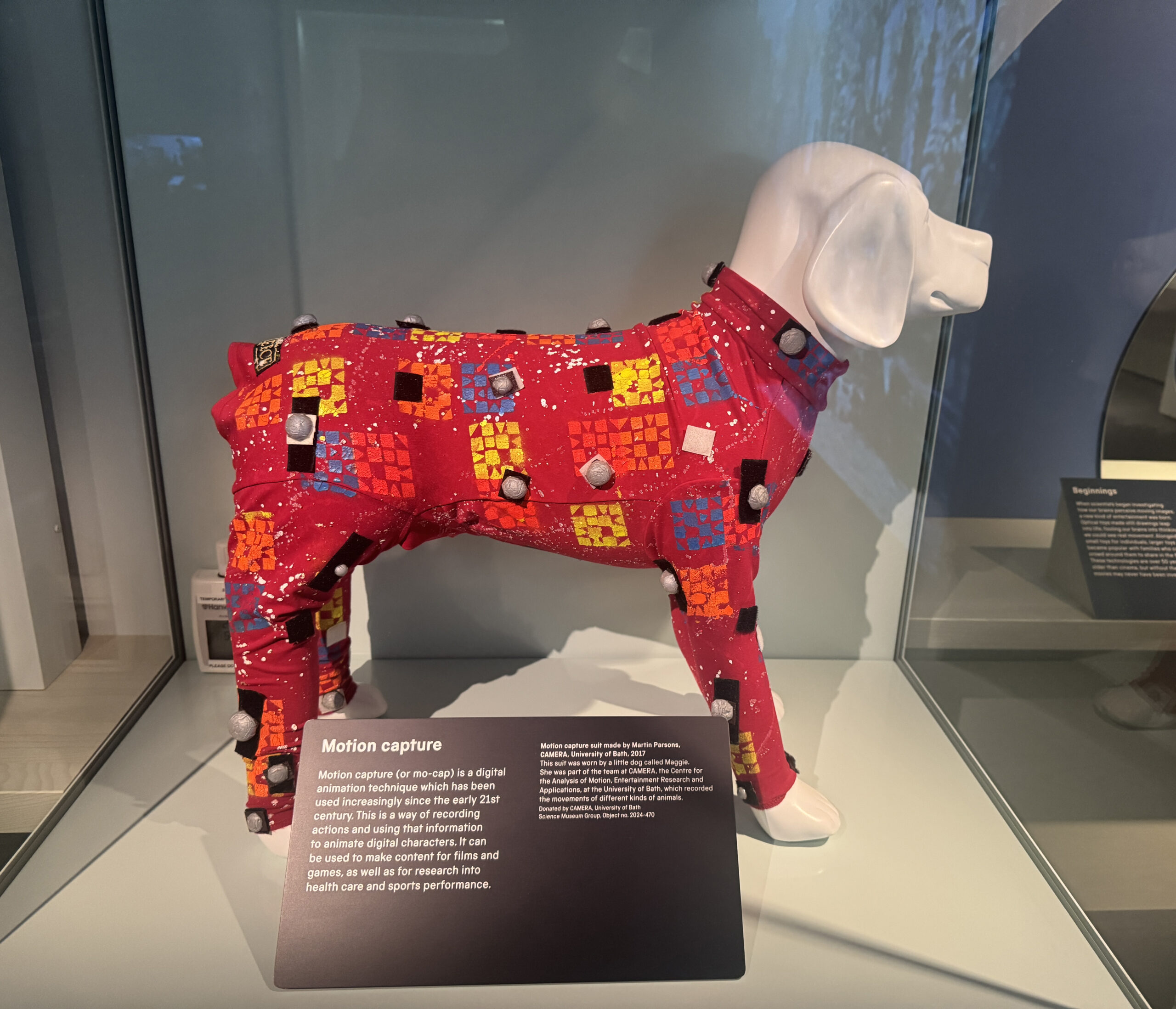
It was really difficult to pick a favourite object in all of the Sound and Vision galleries, having got quite a few great memories of each, but the little motion capture suit has to be one of my favourites!
It was worn by a dog, Maggie, in order to record her movements and translate them onto a computer screen. The little jersey suit is so charming and provided a challenge to get it on the mannequin! Owing to how fragile the paint on the suit is, it was important not to stretch the jersey fabric any more than was necessary. In the end, our mount-maker adapted a dog mannequin so we could remove its legs in order to get the suit over the body, as the only opening was at the back of the suit and unlike a real dog, the mannequin wasn’t able to bend its hocks! In the end, we managed to ease the mo-cap suit on and lock in the mannequin’s legs after feeding them up the legs of the suit! The bizarre scenario of dressing a legless dog mannequin has won this object a special place in my heart.
Finally, as someone who plays computer games that use mo-cap technology, it was great to be involved in displaying some of the behind the scenes equipment that enable that technology and give it a spot within sound and vision technologies!
Alex, Documentation Officer and Lewis, Curator – Loch Ness monster photo
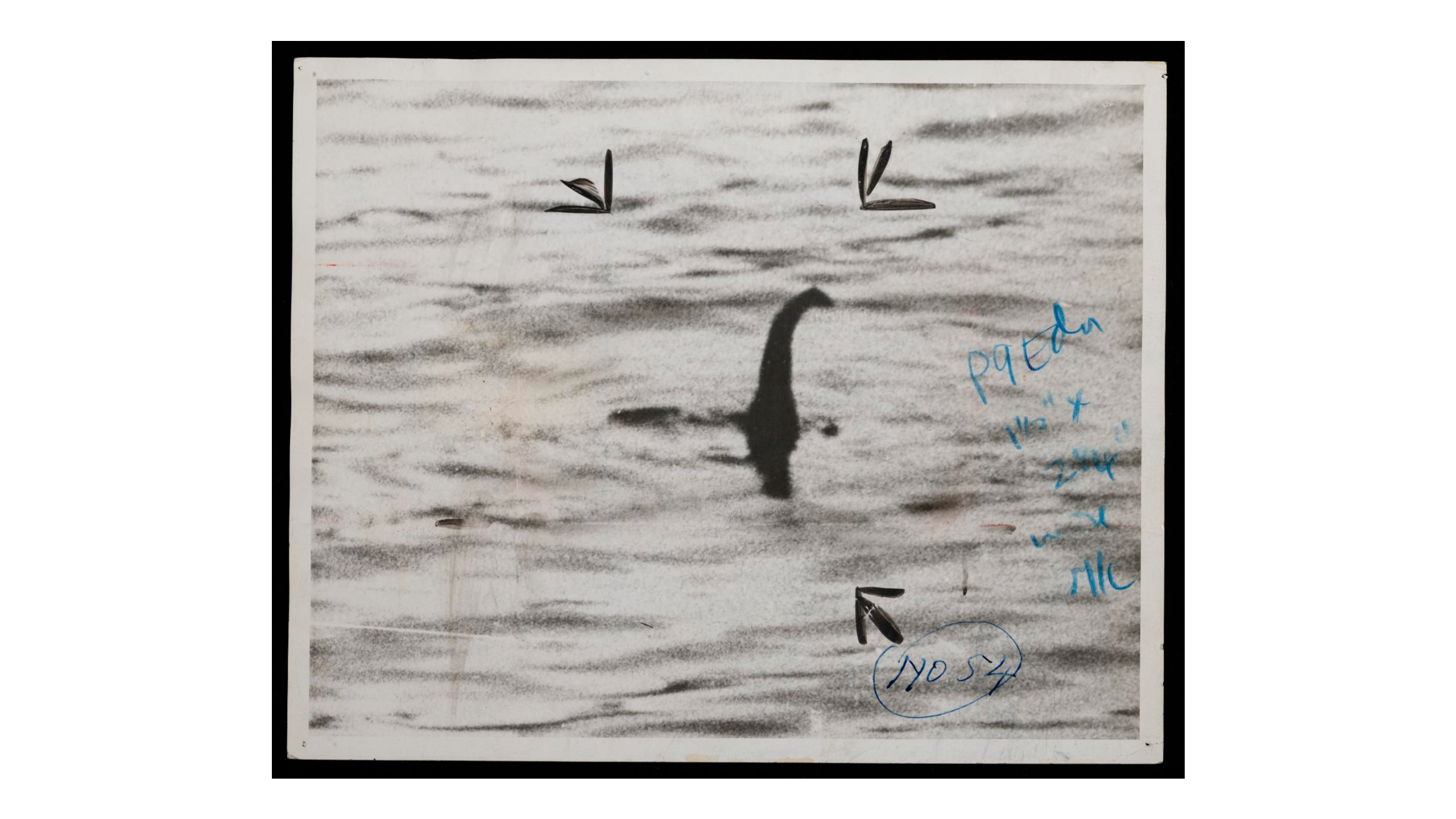
Alex: My favourite object in the Sound and Vision galleries is this photograph of the Loch Ness Monster from the Daily Herald Archive. The idea of a monster lurking in the depths of Loch Ness is compelling, and people have been searching the loch for evidence of Nessie for decades. This photograph dates from 1934. It must have been so exciting for people to see this photograph in the newspapers—finally there was proof! Well, not quite. While some did take this photograph as proof of the monster’s existence, it was later revealed to be an elaborate hoax. The Nessie in the photograph isn’t a creature from the deep, but rather a toy submarine covered in putty! It’s a shame we still don’t have proof that Nessie is real, but this photograph is a great example of how photographic technologies can be used to trick us.
It was my job to find this photograph in our collections stores so it could be catalogued and digitised for use in the new galleries. It turns out Loch Ness isn’t the best place to find Nessie after all—you’ll have more luck searching the depths of our archives!
Lewis: This is the most famous ‘photograph’ of The Loch Ness Monster, and for decades after it was published in newspapers it divided opinion on whether it shows the real Nessie, or an elaborate hoax. The conspiracy was finally revealed in the 1990s. The ‘monster’ was a cleverly crafted model made from a toy submarine and putty. The waves behind Nessie are in fact only small ripples, but the perspective of the image makes them look bigger. One of the people behind the hoax, MA Wetherell, explained that he was motivated to create a fake that would fool the newspapers after his earlier ‘evidence’ of footprints of the Loch Ness Monster were debunked by the Daily Mail. We use this story in our new gallery to explain how sound and vision technologies can be used to fool us, from outlandish stories of monsters in Lochs, to everyday scams. If someone gets a real photograph of Nessie, I’ll put it up next to this one to compare!
Jessica, Conservator – Pianola Roll
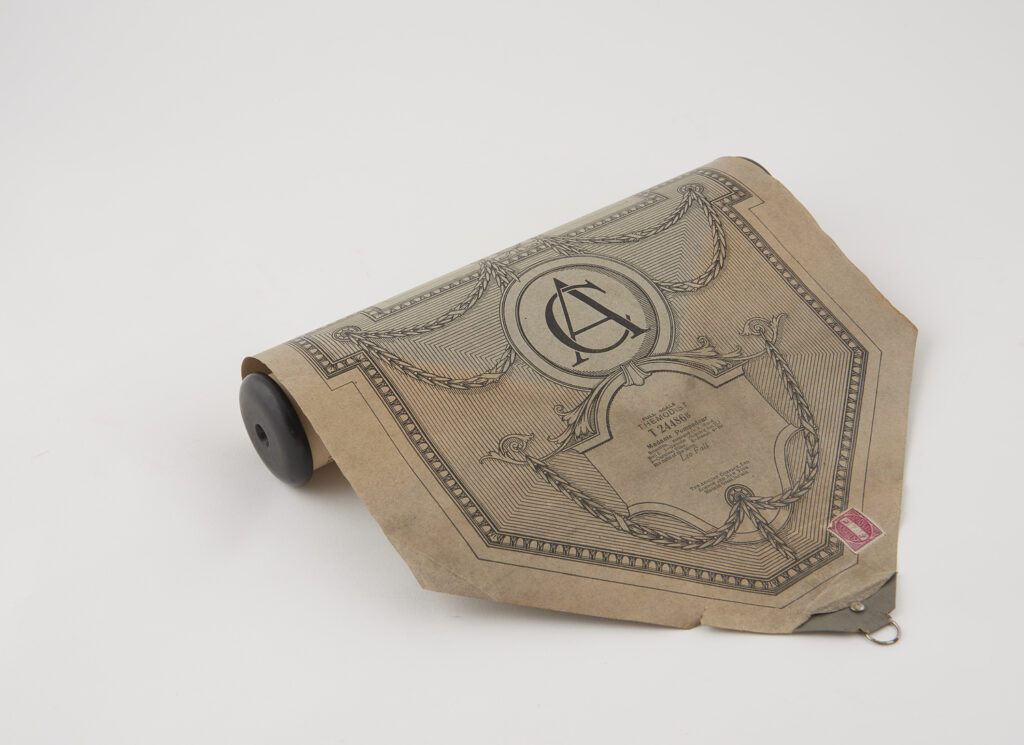
This pianola roll is my favourite object, not only beautiful but interesting as well. It was used with an automatic piano. The roll of paper provides the ‘instructions’ for the piano to play the piece of music, as the holes in the perforated sheet correspond to different notes. In terms of conservation, only minor tear repairs and surface cleaning was needed. But knowing only a section of it would be displayed, I thought this would be a great opportunity to unroll it completely and work with our photography department to photograph its entirety allowing complete access whilst on display. It was great fun although very time consuming to roll it back up again! In total the roll was about 12 metres long.
Martha, Conservator – John Noel’s camera case
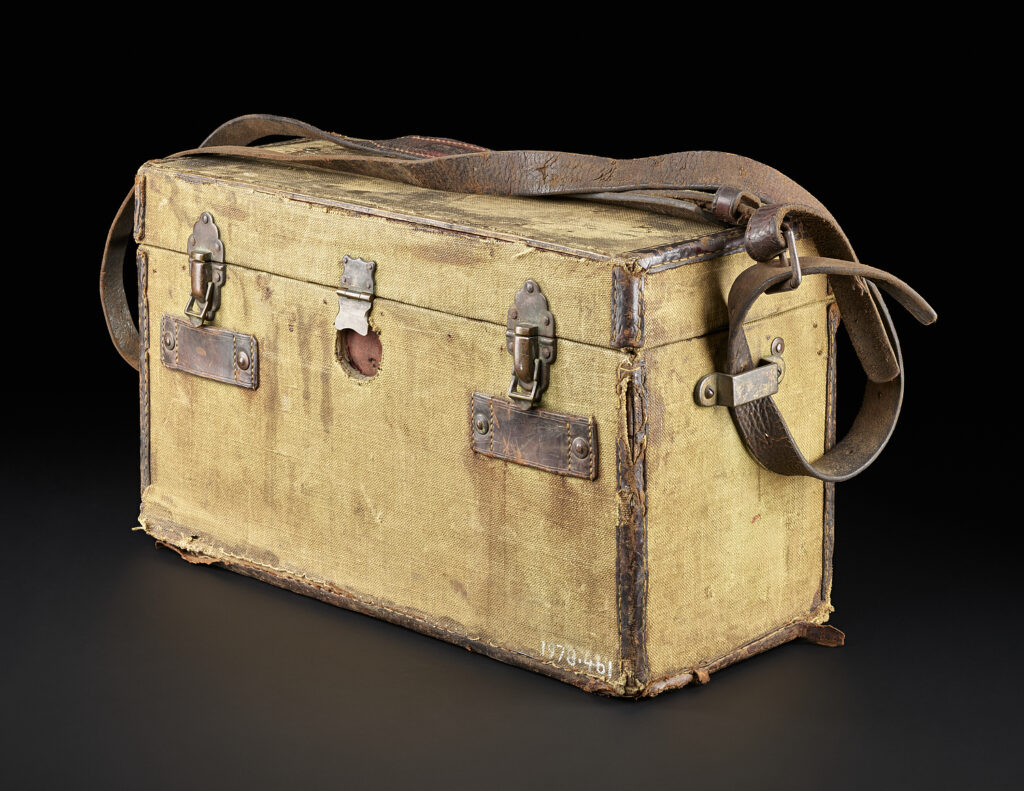
My favourite object is a camera case which was used by John Noel during the 1922 British expedition to Mount Everest. Noel produced the film ‘Climbing Mt. Everest’ which documented the expedition and included the first film ever shot of the mountain. His later (1924) piece, ‘The Epic of Everest’, focused on the infamous expedition in which mountaineers Mallory and Irvine disappeared near the summit. I have had an interest in mountaineering since I read a book focusing on the 1924 expedition and the discovery of Mallory’s body in the 1990’s, so conserving the camera case, an object which was actively used at the time, was an amazing moment for me! To treat the case, I gave it a surface clean with a museum vacuum and brush before re-adhering lifting parts of the canvas and leather lining back into place.
Saquib, Assistant curator – Christopher Lee’s fangs
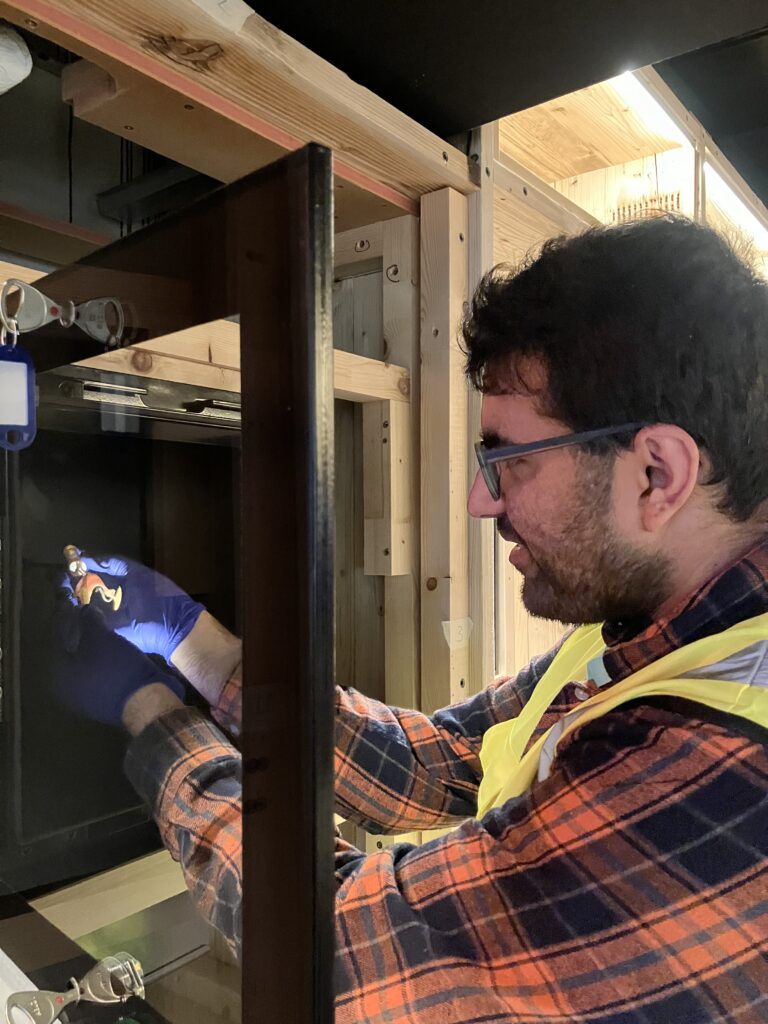
The fangs are my favourite object in Sound and Vision. These were moslded to fit into Christopher Lee’s mouth when he played Dracula and were fitted with a plastic tube filled with fake blood to be released by Christopher Lee to create a blood dripping effect. The object is really cool on its own, but the display on gallery takes the cool factor further with the walls and carpet mimicking the effect of blood dripping around the case and onto the floor. There will even be a replica of the fangs displayed inside a model of a mouth that visitors can touch and get a hands-on experience with to get a better feel of the object and how it was used.
Megan, Masterplan project director – 1980s cassette tapes
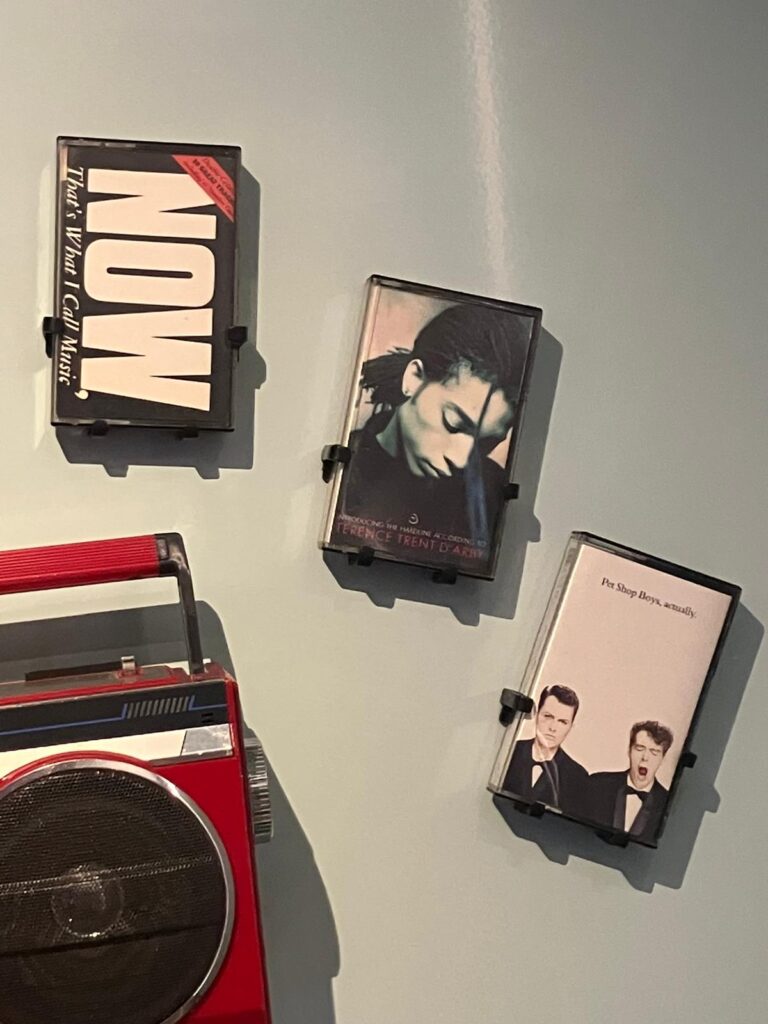
There are so many fascinating objects in the galleries, but my favourites are these tapes, they transport me back to my 80s childhood in a lovely wave of nostalgia. The ‘Now…’ tapes were an essential part of my exploration into pop music, full of the year’s hits (and misses, depending on your musical tastes), Terence Trent Derby was one of the most beautiful men alive then (fact) and just look at that image of the Pet Shop Boys—immaculate.
Charlotte, Head Curator – Planet Earth drone camera
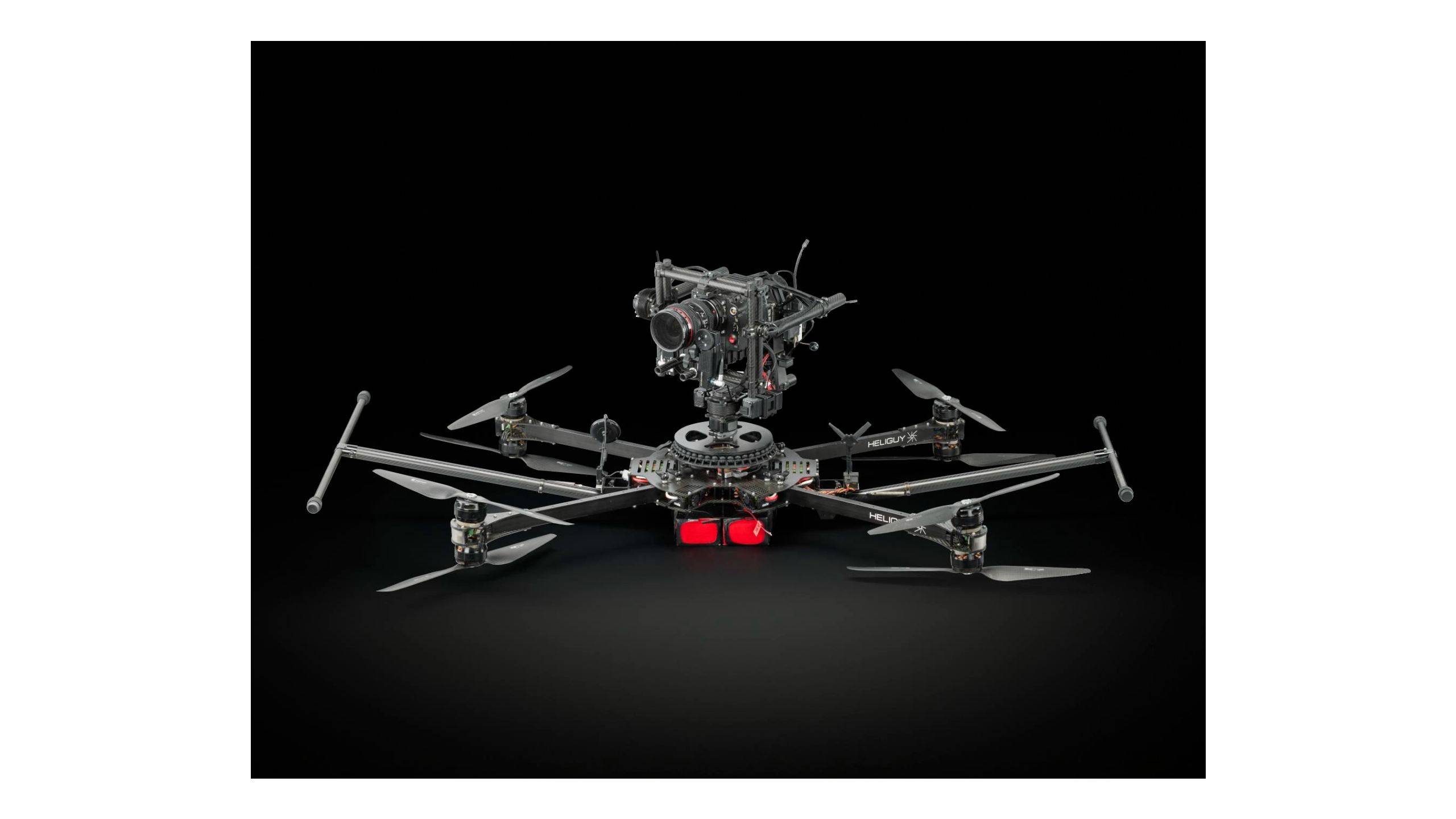
I love everything in this showcase, from the hand-cranked camera used by pioneering wildlife film-maker Cherry Kearton, to the ‘Rockhopper cam’ used to film penguins up close. My favourite, though, is drone camera used to capture footage for the BBC’s Planet Earth II series in 2016. I had a brilliant conversation with drone engineer Alastair Smith. He described how the crew battled heat and moisture to capture amazing shots as the camera moved smoothly from the forest floor, past dangling vines, to finally squeeze through tight gaps between trees to reveal the endless jungle of Costa Rica. He also explained that this exciting view of the jungle was only possible because of new technology. Improved drone aircraft, along with ever lighter cameras and better batteries, were important advances. The technology used to make films about nature has come a long way over the last 100 years, but what all the kit in this case has in common is that it helps reveal the wonder all around us.
Hayley, Archives Cataloguer – Ray Harryhausen Allosaurus model
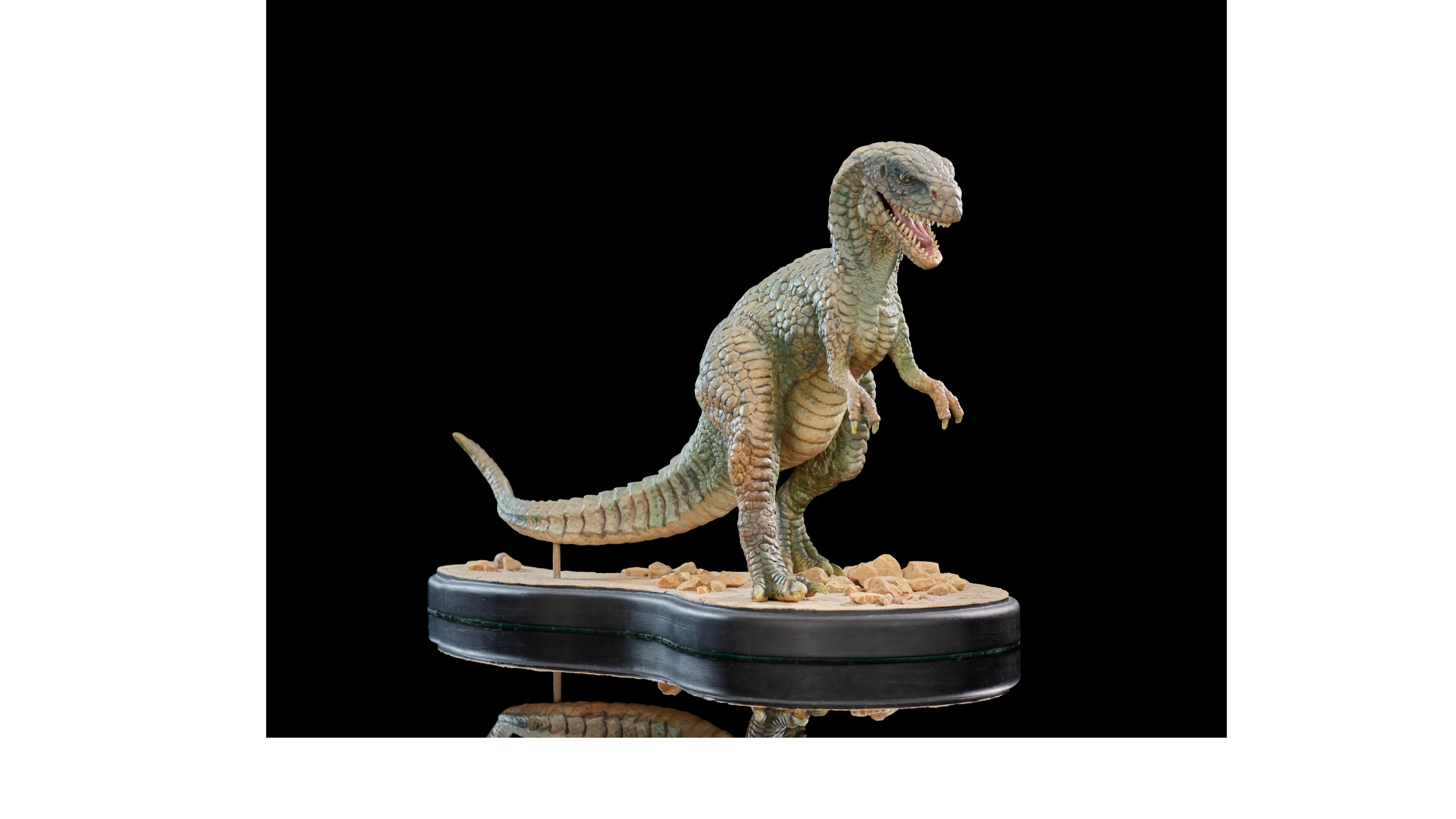
This painted resin fibreglass model of an Allosaurus brings back nostalgic memories of watching Ray Harryhausen films with my family as a child. It was cast from the original mould made by Harryhausen of the creature from ‘One Million Years BC’ (1966) which also featured giant spiders, iguanas and a variety of other dinosaurs. Ray Harryhausen was an animator and special effects creator who was a pioneer in his field. He created an ingenious method of combining live action footage with stop motion animation which he called Dynamation. Although the effects look dated by todays standards, it was a magical and impressive feat for its time!
Toni, Curator and Yvonne, Client project manager – IMAX projector
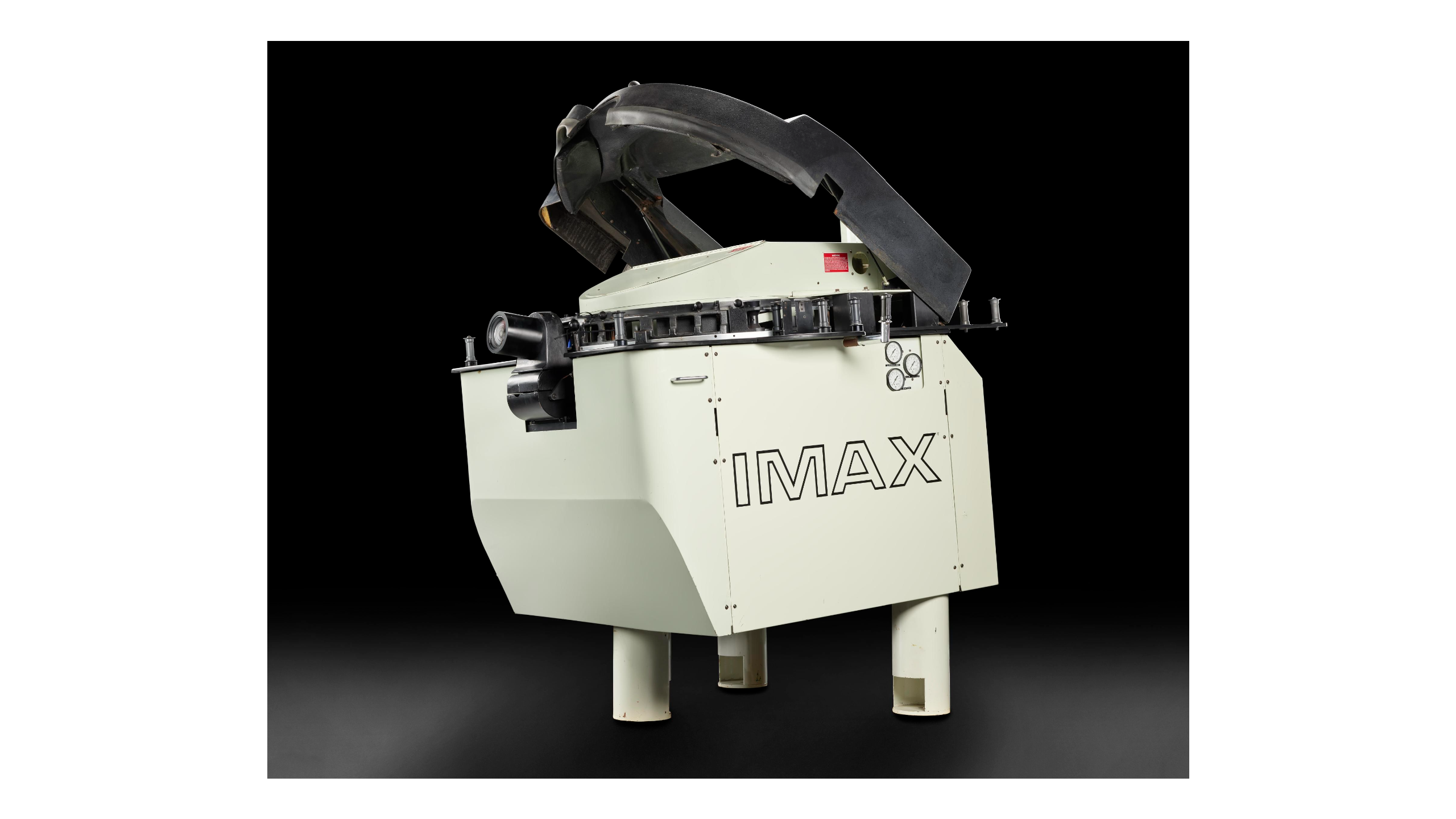
Toni: It might seem like a bit of an obvious choice to select the biggest and heaviest object in the Sound and Vision Galleries, and I may be influenced by the recent memory of helping to gently coax the 900kg beast into its display case.
But the importance of this object both to the development of large format cinema and to the beginning of this museum cannot be underestimated.
This IMAX rolling loop projector, made in 1982 by IMAX Corporation in Canada, was used at the then National Museum of Photography, Film and Television (now National Science and Media Museum) from 1983 to 1997, when it was replaced by a machine capable of projecting both 2D and 3D films.
Large screen experiences are not so unusual now, but when IMAX first hit, with its projected image much larger than the usual 35 or even 70mm films, the impact, as well as the image was huge. I still recall seeing my first IMAX film, Destiny in Space—projected by this very machine. IMAX—go big or go home.
Yvonne: Not copying Toni, but she does have good taste and I’m going to go with the IMAX projector. I was surprised by how much it looks like something from 2001: A Space Odyssey. Good that it’s big and impressive and importantly born in Bradford!
The Sound and Vision Project is generously supported by The National Lottery Heritage Fund thanks to money raised by National Lottery players (Lead Supporter), Bradford 2025 UK City of Culture (Major Supporter), City of Bradford Metropolitan District Council (Associate Funder) and DCMS/Wolfson Museums and Galleries Improvement Fund (Associate Funder).