Colin Ford, the pioneering museum director, curator, broadcaster and founding Director of the museum we know now as the National Science and Media Museum died peacefully in December at the age of 91. Ford was leading the museum when it opened to the public as the National Museum of Photography, Film and Television in Bradford and brought a passion to the role fitting for someone who was regarded as one of the most influential advocates for photography in Britain. He devoted his long career to elevating the medium to a central place in the nation’s cultural life.
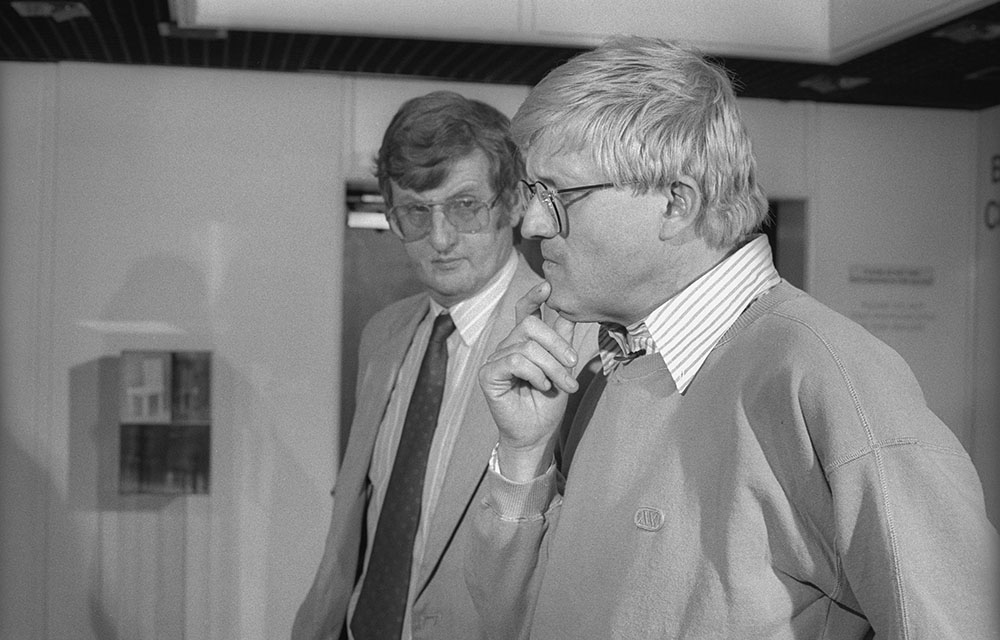
Under his tenure, the museum acquired the Kodak Collection in 1985, which was used as the basis for a major new gallery telling the story of popular photography. Other important acquisitions include the Daily Herald Archive, the Shelter Archive, the Kraszna-Krausz Archive and the Zoltan Glass Archive. He also established collaborations with many photographers including David Hockney and Don McCullin, which endured over many years.
In 1988 NMPFT received the Museum of the Year Award and over the next decade he shaped the museum into one of the most innovative cultural institutions in the UK. His vision combined scholarship, public engagement and technical curiosity, creating a museum that was both intellectually rigorous and accessible to a broad audience. Under his leadership the museum became a landmark destination and a model for how to present visual culture in all its forms. Ford left Bradford to become the Director of the National Museums and Galleries of Wales in 1993.
Hear Colin talk about his time at the museum in this oral history recording from 2012:
Having studied at University College Oxford, his professional life had started in theatre, managing and producing at the Kidderminster Playhouse and teaching English and drama as a visiting lecturer at California State University. His transition into photography and film began in the mid-1960s when he joined the National Film Archive at the British Film Institute as Deputy Curator. His curatorial gifts quickly became evident and in 1972 he was appointed the first Keeper of Film and Photography at the National Portrait Gallery (NPG). There, under the directorship of Roy Strong, he played a transformative role in establishing photography as a core part of the National Gallery’s collecting and research mission and initiating a collection of film. His tenure helped cement the legitimacy of photography within major national institutions at a time when it was still fighting for recognition.
Ford’s influence extended far beyond the institutions he led. He was a passionate champion of photography as an art form, a field he believed deserved the same critical attention as painting or sculpture. His work as a curator, historian, writer and broadcaster helped shift public and academic attitudes, contributing significantly to the status photography holds today in Britain’s’ cultural landscape. Throughout his career, Ford was known for his warmth, generosity and enthusiasm. He remained active in the world of photography, continuing to write, lecture and advise on projects up until his death.
Colin Ford leaves behind a legacy of institutions strengthened, collections enriched and generations inspired. His life’s work fundamentally reshaped the way Britain understands and values photography. He will be remembered as a visionary leader, a gifted communicator and a cultural innovator.
We send our condolences to Colin’s wife, Sue Grayson Ford, their son and grandchildren, and wider family and friends.