Frankenstein (James Whale, 1931)
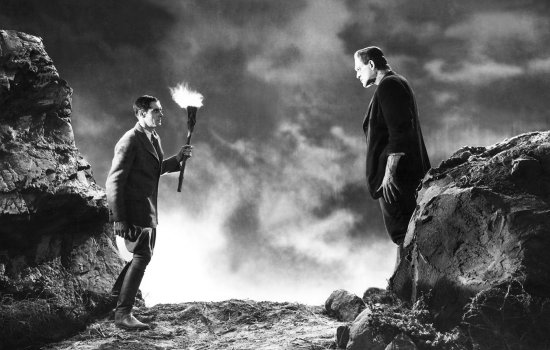
Nearly a century after it first terrified audiences, James Whale’s Frankenstein remains one of the memorable horror films in cinema history. Inspired by Mary Shelley’s 19th-century Gothic novel, the film follows scientist Henry Frankenstein (Colin Clive), whose obsessive experiments succeed in bringing the dead back to life. But his creation, played by Boris Karloff in the performance that made him a horror icon, proves far more tragic and dangerous than anyone imagined.
Released by Universal Pictures in 1931, following the success of Dracula, Frankenstein helped establish the studio’s legendary cycle of monster movies. Whale combines Gothic atmosphere with striking practical effects. At the same time, Jack Pierce’s extraordinary make-up transformed Karloff into the flat-headed, heavy-footed monster who became one of the most instantly recognisable figures in popular culture.
Controversial on release for its violence and disturbing subject matter, the film pushed at the boundaries of what early sound cinema could show to international audiences. Its influence has been enormous, inspiring sequels and generations of filmmakers seeking to create innovative new horror. Experience the film that brought Frankenstein’s Monster spectacularly to life on the big screen.
Bride of Frankenstein (James Whale, 1935)
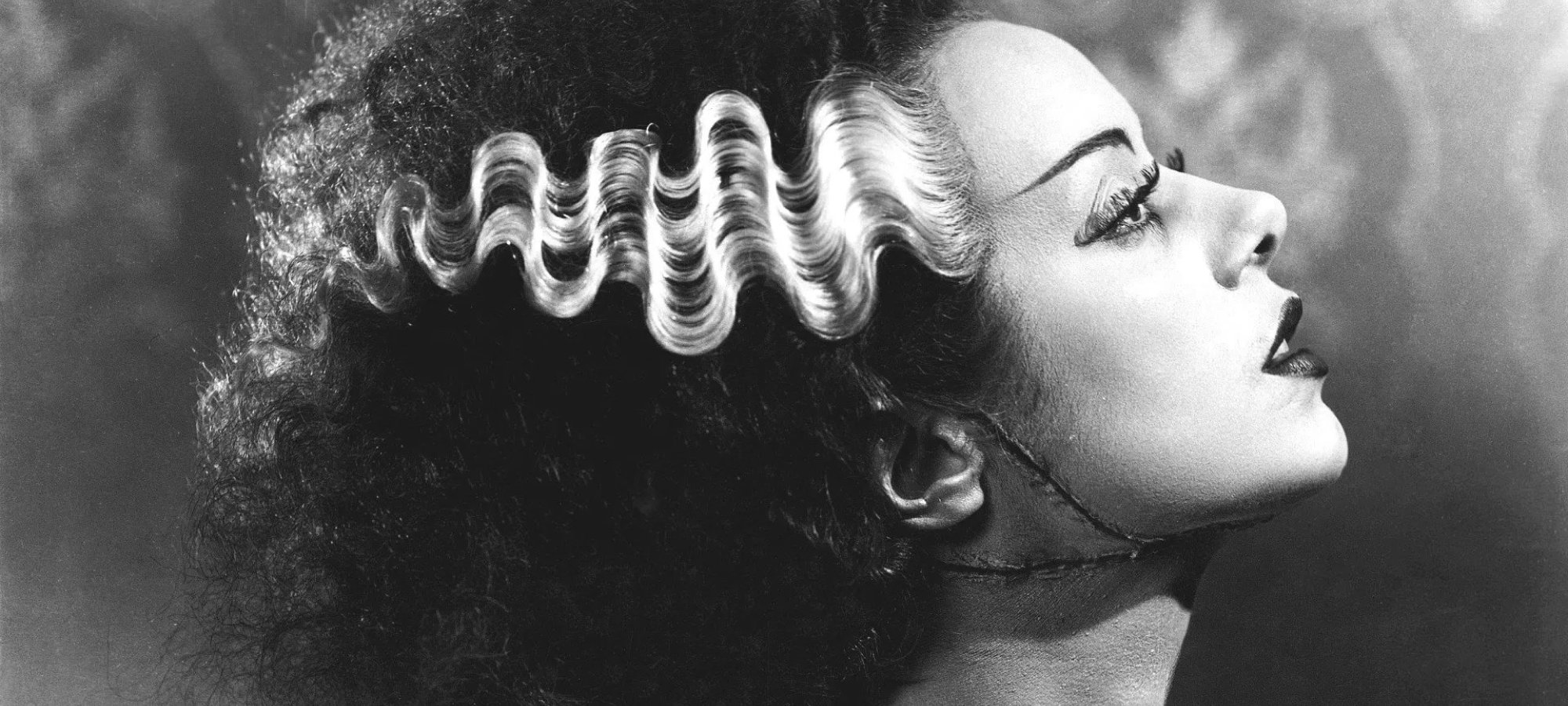
Often hailed as one of the greatest horror sequels ever made, James Whale’s Bride of Frankenstein takes everything that made his original Frankenstein so memorable and transforms it into something even stranger and more ambitious.
Boris Karloff returns as the Monster, now beginning to speak, to understand the world around him, and, above all, to long for companionship. His search for friendship gives the film an unexpectedly tender and tragic heart, while the arrival of the sinister Dr Pretorius draws Dr. Frankenstein back towards the dangerous science he thought he had left behind.
Whale combines the Gothic horror of the original with a darker, more Expressionist style of cinematography. Elsa Lanchester appears in a remarkable dual role as Mary Shelley and the Bride herself, whose lightning-streaked hair and unforgettable appearance have made her one of the first female icons of horror cinema.
Released in 1935, Bride of Frankenstein helped demonstrate just how imaginative the rapidly changing horror genre could be in the early twentieth century. By adding further layers to the characterisation of Karloff’s Monster, the Bride of Frankenstein deepens the Monster from frightening creation into a painfully sympathetic outsider.
The Thing (John Carpenter, 1982)
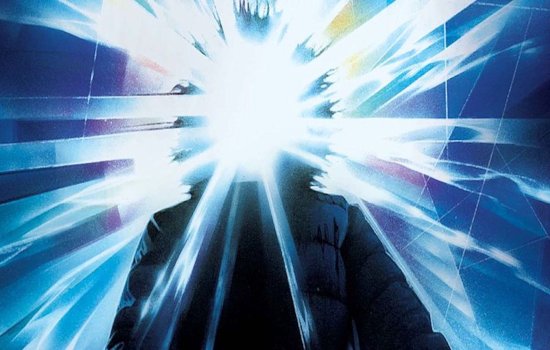
Now regarded as one of the greatest horror films of the 1980s, John Carpenter’s The Thing was far less warmly received when it first arrived in cinemas.
Set at an isolated Antarctic research station, the film follows a group of scientists who encounter an alien organism capable of absorbing and perfectly imitating other living beings. As suspicion spreads through the base, the scientists find that they cannot recognise the threat among them.
The Thing itself is one of horror cinema’s most disturbing, shape-shifting monsters that has no fixed form and, instead, grotesquely transforms the bodies of its victims. Inspired by John W. Campbell Jr.’s novella Who Goes There? and following The Thing from Another World (1951), Carpenter transforms the story into a bleak tale of paranoia and collapsing trust.
Its extraordinary practical effects, led by Rob Bottin, create some of horror cinema’s most unforgettable transformations, while Ennio Morricone’s stark, pulsing score intensifies the atmosphere of approaching doom. Released in 1982 to disappointing box office returns, The Thing gradually found the audience it deserved. Its uncompromising bleakness and spectacular body horror have since made it a landmark of the genre.
Re-Animator (Stuart Gordon, 1985)
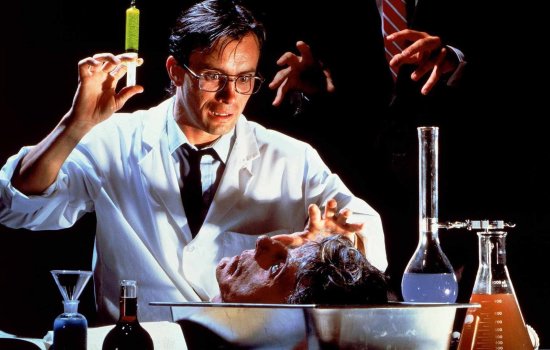
A riotous blend of body horror and black comedy, Stuart Gordon’s Re-Animator is one of the most gory, eye-catching horror films of the 1980s.
Very loosely adapted from H. P. Lovecraft’s ‘Herbert West – Reanimator’, the film follows brilliant but deeply unsettling medical student Herbert West, who arrives at university claiming to have developed a serum capable of restoring life to dead tissue. His roommate Dan Cain is soon drawn into the experiments, with increasingly bloody and unpredictable results.
Jeffrey Combs gives an unforgettable performance as West, a scientist in the mould of Dr Frankenstein. He is utterly convinced of his own genius even as events spiral spectacularly out of control. Around him, Gordon brings the physical energy of his theatre background to the cinema screen and combines grotesque practical effects with a gleefully mischievous sense of humour.
The film’s monsters are the unfortunate products of West’s experiments and reanimated bodies – and body parts – that return from death. Prosthetic heads and copious fake blood make the resulting chaos memorably tactile. Funny and gloriously excessive, Re-Animator turns the Frankenstein story into a delirious 1980s nightmare about scientific ambition and the dangers of refusing to leave the dead alone.
Join us at Pictureville on 24 and 31 October 2026 for Monster Mash: Four Monsters that Changed Horror. Find out more and book tickets.